Source: Adobe Stock Author: Redaction Fall in mortgage payments in February February marks a turning point for thousands of Portuguese families with home loans. Mortgage payments fall for those with contracts linked to the 3- and 12-month Euribor, but rise for borrowers tied to the 6-month Euribor. This division reflects the uneven evolution of the indices and puts many families on alert for the coming months. Around 30% of mortgage loans benefit from the fall in payments in February, according to data from the Bank of Portugal. Even so, the relief is not universal and confirms that the cycle of widespread reductions is losing momentum. 6-month Euribor increases mortgage costs For contracts linked to the 6-month Euribor, February brings a further rise in mortgage payments. For a €150,000 loan over 30 years with a 1% spread, the payment increases by around €6.60, exceeding €640. This is the third consecutive rise, signalling the end of the relief period experienced over the past two years. The persistence of the 6-month Euribor above 2.1% during January explains this increase. This index, one of the most widely used in Portugal, is slower to reflect rate cuts, directly affecting household budgets. Limited relief for 3- and 12-month contracts For those with loans linked to the 3-month Euribor, mortgage payments see a slight decrease in February. However, the reduction is almost symbolic, less than one euro, far from the impact felt in previous months. For contracts linked to the 12-month Euribor, the situation is more favourable. Mortgage payments fall by more than 3%, representing a significant monthly saving. This index continues to reflect the effects of European Central Bank rate cuts more consistently. Despite these reductions, the market anticipates a prolonged stabilisation of interest rates. Expectations point to current levels being maintained until summer, with possible rises afterwards. For families, managing mortgage payments will continue to require prudence throughout 2026.
Source: Adobe Stock Author: Redaction Real estate and mortgage credit in a new cycle The year 2026 is expected to mark a new phase for the real estate sector in Portugal, characterised by greater stability and lower volatility. After several years of strong pressure on prices and significant changes in financing conditions, the market is beginning to show signs of increased predictability. This development is particularly relevant for families and investors considering structural decisions, such as buying a primary residence or strengthening real estate investment. Real estate remains a central pillar of the economy and financial decision-making, but it is entering a more moderate cycle. Property values are expected to continue rising, although at a less intense pace, reflecting a gradual balance between supply and demand. The absence of sharp price corrections requires a more strategic approach, especially for those looking for housing in urban areas, where demand pressure remains high. Supply, demand and adjustments in the real estate market The dynamics of real estate in 2026 will be strongly influenced by the evolution of supply. Measures aimed at increasing construction, urban regeneration and simplifying processes are expected to have gradual effects, but without immediate impact. For this reason, the market will continue to require patience and careful analysis, especially for those who cannot postpone housing decisions. In major cities, real estate is expected to remain resilient, supported by structural demand and limited availability of properties. In peripheral or emerging areas, interesting opportunities may arise, particularly for those analysing the market from a medium- to long-term perspective. This segmentation reinforces the importance of informed decisions aligned with each buyer’s profile. Interest rates and impact on real estate With regard to mortgage credit, 2026 is expected to be marked by stability in interest rates. Monetary policy points to a scenario of consolidation, with more predictable financing costs. For real estate, this predictability is a positive factor, allowing greater security in household financial planning. Although a return to historically low rates is not expected, the current context reduces the risk of abrupt fluctuations. This creates conditions to assess solutions such as mixed or fixed rates, especially for those who value stability in monthly payments. Inflation, although under control, will continue to influence economic decisions, requiring greater discipline and rationality in managing household budgets. Planning and opportunities in real estate in 2026 Real estate in 2026 will not be marked by impulsive decisions, but by strategic choices. The combination of more stable prices, predictable credit and moderate confidence creates a favourable environment for solid planning. In an uncertain international context, prudence becomes essential, without compromising the ability to seize opportunities. With adequate information, a long-term vision and responsible risk management, the real estate sector can continue to offer sustainable solutions. Preparing real estate decisions today will be crucial to ensuring financial security and stability in the future.
Source: Adobe Stock Author: Redaction Buying a house in Portugal requires more than 25 years of rent Buying a house in Portugal requires, on average, a financial effort of almost 30 years of rent. The ratio between the average sale price and the annual rental value reveals that most districts exceed 25 years, which makes buying a heavier decision for those considering acquiring a home. Clear differences between inland and coastal areas The reality is not uniform. Inland, districts such as Castelo Branco, Guarda and Bragança have lower ratios, between 13 and 17 years, which makes buying more balanced. These territories benefit from more contained sale prices and lower demand pressure, being an interesting alternative for those with job stability or remote work. Large urban centres and tourist areas drive prices up In urban centres and the most sought-after coastal areas, the effort to buy a house increases significantly. Lisbon, Porto, Setúbal, Braga, Aveiro and Faro register high ratios, reflecting sale prices far above the rental income capacity. In these markets, renting tends to be the more flexible and financially less demanding option, especially for those who value professional mobility. The decision between buying a house in Portugal and renting depends on the territory The choice between buying a house in Portugal and renting varies depending on the territory and the profile of each family. Inland, buying can be more rewarding in the medium and long term, while in large centres and tourist areas renting has greater advantage. The trend for remote work can expand opportunities inland, and a possible drop in interest rates could make even more districts competitive for buying a house.
Source: Adobe Stock Author: Redaction What the IMT exemption for young people is The IMT exemption is a tax measure that remains in force in 2026 and aims to support young people up to the age of 35 when purchasing their first main and permanent residence. This benefit fully or partially eliminates the payment of the Municipal Tax on Onerous Property Transfers, one of the main upfront costs when buying a home. To benefit from the IMT exemption, the buyer must not have previously owned another residential property. Limits and conditions of the IMT exemption The IMT exemption is total for properties with a value of up to around €316,000. Above this amount, and up to approximately €633,000, a partial exemption applies, with tax charged only on the amount exceeding the limit. In addition to the maximum age of 35, the buyer must not be considered a dependent for IRS purposes in the year of purchase nor have owned a primary residence in the three years prior to the acquisition. These rules ensure that the IMT exemption is targeted at first-time home buyers. Impact of the IMT exemption on access to housing The IMT exemption has a direct impact on the financial capacity of young buyers, allowing for significant savings at the time of completion. In areas where house prices remain high, the IMT exemption can make the difference between proceeding with a purchase or not. Since the measure came into force, there has been an increase in the share of young people in new mortgage lending, showing that the IMT exemption contributes to greater dynamism in the youth property market and to the promotion of housing autonomy in Portugal.
Source: Adobe Stock Author: Redaction Profitability of buying a home to rent in Portugal Buying a home to rent in Portugal recorded an average gross return of 6.5% at the end of 2025. Despite a slight decline compared to the previous year, this figure remains above the levels seen at the start of the decade. Property investment for rental purposes continues to be appealing both to experienced investors and to families with available savings, especially in a context of strong demand for rental homes. This moderate reduction in profitability is associated with lower business risk, making the decision to buy a home to rent in Portugal more stable and predictable in the medium and long term. Evolution of the rental market in 2025 Throughout 2025, house prices continued to rise at a faster pace than rents, which had a direct impact on gross profitability. Even so, buying a home to rent in Portugal remains a solid option, as returns exceed those of other recent periods and keep pace with the growing need for supply in the rental market. Gross profitability reflects the return before taxes and charges and is an essential indicator for assessing the balance between risk and return. As a rule, lower profitability indicates greater security in property investment. Most and least profitable cities to invest Among the cities analysed, Bragança stood out as the most profitable for buying a home to rent in Portugal, followed by Coimbra, Santarém, Leiria and Ponta Delgada. These locations offer higher returns but may involve greater risk, such as lower demand or uncertain future appreciation. Cities such as Braga, Évora, Porto and Setúbal show intermediate levels of profitability. Lisbon, Aveiro and Funchal recorded the lowest figures, reflecting high purchase prices. However, these cities offer greater security, liquidity and potential for property appreciation. Buying a home to rent in Portugal: risk and opportunity Buying a home to rent in Portugal continues to be a relevant strategy to stimulate the housing market and respond to the housing access crisis. With lower risk compared to previous years and still competitive profitability, this type of property investment suits different profiles. Choosing the right location is key to balancing return and security. In 2025, buying a home to rent in Portugal is confirmed as a solid opportunity in a changing market, with consistent demand and positive long-term prospects.
Source: Adobe Stock Author: Redaction Continued growth in mortgage lending Mortgage lending maintained its accelerating trend in November 2025, recording a 9.8% increase compared with November 2024. The total stock of loans for house purchases reached €110.1 billion, €983 million more than in the previous month, according to data from the Bank of Portugal (BdP). This marks the 23rd consecutive month of acceleration in mortgage lending, reflecting strong demand for property and confidence in the financial market. Household and consumer credit In the same period, total lending to households grew by 9.4% year-on-year. Consumer credit and loans for other purposes increased by €144 million compared with October, totalling €33.5 billion. The annual growth rate stabilised at 7.2% for consumer loans and rose to 9.2% for loans for other purposes, showing greater diversification in household financing. Corporate lending and key sectors Corporate lending stood at €74 billion at the end of November, €194 million more than in October, representing annual growth of 4.3%. Micro and small enterprises maintained positive annual growth rates (13.6% and 4.2%, respectively), while medium-sized and large companies recorded declines of -1.4% and -0.8%. The construction and real estate activities sector stood out with growth of 8.6%, while industry and electricity recorded a slight slowdown (0.9%). Trade, transport and accommodation increased by 3.7%, with lending to accommodation/restaurants and trade rising by 5.4% and 5.3%, respectively, and transport falling by 3%. Household deposits continue to rise Household deposits in Portuguese banks increased by €2.4 billion in November, reaching €199.9 billion. Sight liabilities rose by €1.888 billion, while term deposits increased by €549 million. Year-on-year, deposits grew by 4.4%, the lowest increase in over a year. This stabilisation may be linked to deposit remuneration and the rise in net subscriptions of savings certificates and investment funds, according to the BdP.
Source: Adobe Stock Author: Redaction Drop in prices in the Portuguese residential market Over the past 12 months, several Portuguese municipalities have recorded significant drops in average housing prices, with reductions reaching up to 15%. The Centre and Alentejo regions lead this trend, reflecting greater accessibility for those looking to buy a house. These falls may represent opportunities for investors and families seeking properties at more competitive prices. Municipalities with the largest drops The biggest reduction was recorded in Golegã, Santarém, where the average housing price fell 15.3%, reaching 1,083 euros/m². Next are Pampilhosa da Serra, Coimbra, with a drop of 12.3% (477 euros/m²) and Pombal, Leiria, down 8% (1,162 euros/m²). Alcoutim, in Faro district, also saw a significant decrease of 6.7%, with prices reaching 1,081 euros/m². Price drops in Alentejo and the Centre In Alentejo, Borba and Portel, both in Évora district, recorded identical decreases of 5.3%, at 875 euros/m² and 758 euros/m², respectively. In the Centre, Gouveia (Guarda) fell 4.7% to 594 euros/m², Chamusca dropped 4% (756 euros/m²), Penacova decreased 3.1% (500 euros/m²), and Tábua fell 2.1% to 665 euros/m². These reductions highlight a trend of falling prices outside major urban centres. Other locations with notable declines In Leiria, Figueiró dos Vinhos recorded a 2% drop, settling at 715 euros/m². In the North, Melgaço fell to 544 euros/m² (-1.8%), Vila Real dropped 1.6% to 1,343 euros/m², and Vizela closed the list of largest falls with -1.4%, at 1,425 euros/m². These figures show that even in more peripheral regions, buying a house has become more affordable, creating opportunities for those wishing to invest or move.
Source: Adobe Stock Author: Redaction Buying a home in Portugal has become a structural challenge, especially in recent years, marked by strong price pressures. The fiscal measures created to support young buyers when purchasing a home emerged as a political response to this problem, reducing initial costs associated with acquisition. However, the market reaction revealed indirect effects that limited the actual impact of these exemptions, altering the dynamics of supply and demand. Eliminating taxes at the stage of buying a home increased the immediate financial capacity of many buyers, making them more competitive in the market. This improvement in purchasing power quickly translated into higher demand, particularly in specific price segments. Without a proportional growth in supply, prices adjusted upwards, absorbing the initially created fiscal advantage. Tax exemptions and effect on home purchase prices When the cost of buying a home is artificially reduced through tax benefits, the market tends to respond. The greater financial availability of buyers is often reflected in the prices requested by sellers, who adjust values in light of the perceived higher negotiating margin. This phenomenon was particularly noticeable in properties at the upper limits defined by the exemptions, where demand pressure was most intense. In practice, the savings obtained when buying a home without certain taxes proved temporary. Within a few months, property appreciation neutralised the benefit, placing buyers in a similar position as before, but with higher prices. This effect was not limited to those benefiting from exemptions, also affecting those excluded from the measure and who now faced a more expensive market. Who wins and who loses when buying a home Young people seeking to buy a home with fiscal support saw their benefit quickly erode. Although they managed to reduce initial costs, they faced higher prices in a short period. For those not eligible, the impact was even more penalising, as they had to compete in an inflated market without any fiscal compensation. This scenario highlights a structural problem: supporting demand without reinforcing supply tends to worsen imbalances. Buying a home becomes more difficult when prices rise broadly, regardless of occasional incentives. The measure ended up benefiting mainly home sellers, who capitalised on the buyers’ increased financial capacity. Buying a home in a market with limited supply The difficulty of buying a home in Portugal is strongly linked to the shortage of housing supply. While new constructions and rehabilitation projects do not keep pace with growing demand, any stimulus on the demand side tends to be reflected in price increases. This context makes it clear that isolated measures have limited effectiveness. For those intending to buy a home, the current market requires careful financial planning, thorough analysis of areas, and a realistic assessment of borrowing capacity. The expectation that fiscal incentives alone will solve the housing access problem proves insufficient in a context of strong structural imbalance. Future perspectives for those wanting to buy a home The debate around policies supporting home buyers should increasingly focus on creating supply. Investment in affordable housing, simplification of planning processes, and construction incentives are essential elements to stabilise prices. Without these measures, fiscal benefits will continue to have limited and temporary effects. In summary, buying a home in Portugal remains a difficult goal for many families. Tax exemptions brought initial relief but also contributed to a rapid price adjustment. The future challenge lies in balancing supply and demand, ensuring that buying a home ceases to be a privilege and becomes a real and sustainable possibility for more people.
Source: Adobe Stock Author: Redaction The current housing context in Portugal Housing has become one of the main economic and social challenges in Portugal. The continuous rise in purchase and rental prices, combined with insufficient supply, has made access to housing difficult for young people, families and workers with average incomes. This prolonged pressure led the Government to formally recognise the severity of the situation and to reinforce public housing policy in the 2026 State Budget. The housing strategy focuses primarily on increasing supply, mobilising public assets, and creating incentives to make the market more balanced. The aim is to develop structural and lasting solutions, reducing reliance on temporary measures and mitigating inequalities in access to housing. Existing housing programmes Portugal currently has various instruments aimed at housing, targeting different population segments. Among the most relevant are support for youth rental, affordable rental programmes, and public and cooperative housing initiatives. These mechanisms seek to meet diverse needs, from transitioning to independence to situations of greater housing vulnerability. Public housing plays a central role through the construction and rehabilitation of units at controlled costs, managed by public entities and municipalities. At the same time, rental support programmes aim to reduce financial pressure on families, ensuring greater predictability and contractual stability. The combination of these solutions is designed to create a more inclusive and functional housing market. Strengthening public and private investment In 2026, housing policy benefits from a significant increase in public investment. A substantial portion of resources is directed to the construction and rehabilitation of homes, with ambitious execution targets for the coming years. Affordable housing is prioritised, both in urban areas and in regions with lower population density. Simultaneously, the Government encourages private and cooperative sector involvement through partnerships and tax incentives. Reduced VAT on moderate-priced housing construction, rental tax benefits, and temporary exemptions on taxes for housing aimed at affordability are intended to stimulate new projects and accelerate the market response. Simplification and territorial management Another central aspect of the 2026 housing strategy is administrative simplification. The revision of licensing processes and territorial planning instruments seeks to reduce delays and uncertainties, facilitating the launch of new housing developments. This modernisation is considered essential to unlock investment and increase housing supply in the short term. The transfer and reuse of public assets, including land and unused buildings, also offers an opportunity to create new housing solutions. Local management of these assets allows for responses more closely tailored to the specific needs of each area. What to expect from housing in 2026 The year 2026 does not introduce a revolution in housing programmes but marks a clear strengthening of existing policies. Increased investment, fiscal incentives and reduced bureaucracy create conditions for a gradual market impact. While many effects will only become fully visible in the following years, housing is positioned as a strategic priority, with a more integrated approach aimed at sustainable results.
Source: Adobe Stock Author: Redaction Mortgages with increasingly long terms In Portugal, many families are opting for mortgages of 30 years or more to manage monthly payments. This trend arises in a context of high property prices and incomes that do not match the cost of housing. While it eases immediate financial pressure, it involves prolonged debt and significantly increases the total loan cost. This situation is particularly evident among young people and households starting their working lives, for whom long-term loans are often the only way to access homeownership. This scenario increases families’ exposure to future risks, especially in the event of economic changes or fluctuations in disposable income. Long-term financial impact and market norm Although extending the mortgage term reduces monthly payments by a few dozen euros, the overall financial burden remains high. Over time, the total amount paid to the bank rises significantly, forcing many families to cut other expenses and maintain stricter budget management. Choosing a long-term mortgage should be done carefully, comparing offers and negotiating terms wherever possible. A lower payment today can result in a much higher total cost in the future, making a well-planned financial strategy essential. The combination of rising property prices and still relatively high interest rates is making long-term terms increasingly the norm. This trend highlights a structural issue in the market: disposable incomes do not keep pace with housing costs, forcing families to rely on long-term solutions to enter the property market.
Source: Adobe Stock Author: Redaction New momentum for real estate in Setúbal The real estate sector in Setúbal once again takes on a central role in addressing housing needs, with the opening of applications for the purchase of cost controlled homes. This initiative emerges in a context where real estate faces significant challenges, marked by widespread price increases and growing difficulty for many families to access housing. By making homes available at more moderate prices, local real estate seeks to balance rising demand with more accessible and socially responsible solutions. In total, 145 homes will be made available in the Nova Azeda development, a project that reinforces the importance of planned real estate focused on the public interest. Applications are open until the end of December and cover several property types, allowing real estate to respond to different family profiles and housing needs. Property types and prices in cost controlled real estate The diversity of supply is one of the strengths of this real estate project. One bedroom homes represent a relevant solution in real estate for single people or couples, offering functional areas and lower entry prices. Two bedroom properties account for a significant share, responding to demand from medium sized families, while three bedroom homes strengthen the supply of family oriented real estate suitable for larger households. The controlled prices reflect a clear strategy of intervention in real estate, seeking to ensure that housing remains accessible in an increasingly pressured market. This approach contributes to residential stability and to creating conditions that favour population retention within the municipality. Urban planning and impact on the real estate sector This real estate project results from the sale of municipal plots and is part of an urban development model that values coordination between public entities and developers. Cost controlled real estate thus emerges as an essential urban policy instrument, promoting social cohesion and more balanced city growth. Integration into the special housing development regime provides greater predictability for real estate, ensuring clear rules and transparency in access to homes. This framework is essential to guarantee that real estate fulfils its social function and does not become merely an object of speculation. Economic and social benefits of affordable real estate Beyond its direct impact on housing, this project generates positive effects on local real estate and the regional economy. The construction of the homes stimulates economic activity, creates jobs and strengthens value chains linked to real estate, from construction to urban management. At the same time, increased supply helps to ease price pressure in other areas of the municipality. In summary, cost controlled real estate in Setúbal establishes itself as a concrete response to current housing challenges. By investing in more accessible and well planned real estate, the municipality promotes a more inclusive and sustainable urban development model aligned with the real needs of the population.
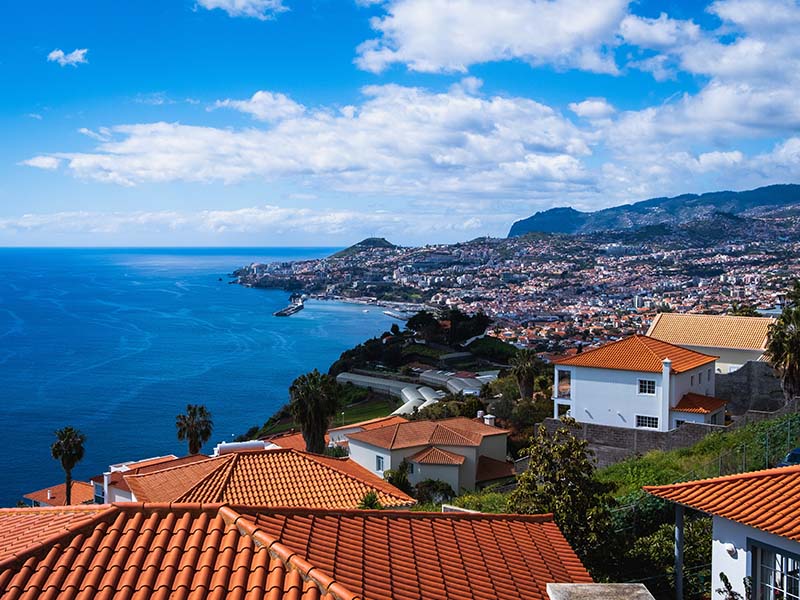
Source: Adobe Stock Author: Redaction Buying a house in Funchal: prices rise to €3,864/m² Buying a house in Funchal has become more demanding, with the price per square metre reaching €3,864, and the Autonomous Region of Madeira standing out as one of the areas in the country with the highest appreciation . The annual increase of 14.5% reinforces the trend of growing demand and pressures those looking to buy a house in Funchal, a market that is increasingly competitive and valued. Madeira sees strong appreciation and Funchal leads prices In November, Madeira recorded the third highest national increase in housing costs. Buying a house in Funchal occurs within a regional context marked by significant rises across several municipalities. Ribeira Brava led the increases with 47%, followed by Machico (37.9%) and Santa Cruz (28.5%). Santana, São Vicente, and Funchal itself also saw consistent rises, with no municipality showing a decrease compared to the previous year. Funchal remains the most expensive municipality to live in, at €3,864/m², closely followed by Ribeira Brava (€3,820/m²) and Porto Santo, where the price per square metre jumped 48.2% to €3,801. Machico reached €3,145/m² and Santa Cruz €3,020/m², while Santana and São Vicente remain more affordable despite the increases. National trend confirms widespread price growth The appreciation trend is not limited to Madeira. Buying a house in Funchal reflects a national reality, where the average price reached €3,000/m², up 7.8% from the previous year. Districts and islands such as Santarém, Beja, and Portalegre recorded some of the largest rises, while Lisbon remains the most expensive destination at €5,914/m². Nevertheless, Funchal continues to rank among the highest-valued cities, highlighting the impact of domestic and international demand. At the level of districts and islands, Porto Santo recorded the largest increase, followed by several Azorean islands and Santarém. Madeira also positioned itself at the top, with an annual appreciation exceeding 14%. In absolute terms, Lisbon, Faro, Porto Santo, and Madeira occupy the top positions, consolidating Funchal as one of the country’s most valued residential markets.


 Deutsch
 Português
 English
 Français
 Español
 Nederlands
 Русский
 中文(简体)