Photo: Adobe Stock Author: Redaction Review paves the way for a new rate Porto City Council will proceed with a review of the tourist tax regulations, starting a process that could result in an increase in the amount paid by visitors. The tourist tax is currently three euros per night, after rising from two to three euros in 2024. The proposal to be put to a vote by the council does not yet set a new amount. At this stage, it provides for a 10-working-day period during which interested parties can participate and submit contributions on the regulatory changes. The possibility of increasing the tourist tax to four euros has already been raised by the council, bringing the amount charged in Porto closer to that applied in Lisbon. Tourism grows and generates more revenue The review comes amid a period of growth in tourism activity in the city. Between 2019 and 2025, the number of overnight stays increased by 45.6%, exceeding 6.6 million last year. Over the same period, the number of guests grew by 37.2%, surpassing three million. The average length of stay also increased, from around 2.04 nights in 2019 to 2.16 nights in 2025. In the first six months of 2026, overnight stays rose by 4.48%, while the number of guests increased by 3.53% compared with the same period of the previous year. The growth in tourism was also reflected in municipal revenue. In 2025, the tourist tax generated €32.3 million, 54.5% more than in the previous year. Porto seeks to balance tourism and the city The council considers that the increase in visitor numbers also means greater use of public services and infrastructure, including urban cleaning, mobility, security, culture and heritage. In this context, the tourist tax is seen as a source of revenue to cover part of the costs associated with tourism activity. The review is also linked to the municipal strategy to fund free public transport for residents. At the same time, the council aims to maintain Porto as a tourist destination without compromising the quality of life of those who live in the city. The goal is to strike a balance between tourism activity and residents’ needs. Following approval to begin the procedure, a period will be opened for interested parties to participate. Only at a later stage is a specific proposal for the new tourist tax amount expected to be presented.
Source: Adobe Stock Author: Redaction Municipality aims to triple housing supply Finding a home at a price that is compatible with household incomes remains a challenge in Porto. To help meet demand, the local authority is strengthening its commitment to affordable rental housing and intends to significantly increase the number of homes available under this scheme. The municipality has already delivered around 500 affordable rental homes. By the end of the current term, Porto City Council aims to reach 1,600 homes, increasing the supply available to families facing difficulties in the private rental market. This target requires a major expansion of the housing response promoted by the municipality, which is looking for new solutions to increase the number of properties covered by affordable rental housing. Renovation and construction among the solutions The local authoritys strategy involves using different models to create new affordable rental opportunities. Renovating existing buildings is one of the approaches being used, allowing properties to be restored and converted into housing. One example can be found in Cedofeita, where an old building is being renovated to create 25 new homes for this scheme. In addition to renovating properties, the municipality is also seeking homes from private owners and developing projects through Porto Vivo SRU. The construction of new buildings and partnerships with private entities are also part of the strategy to increase supply. More housing to meet demand The focus on affordable rental housing aims to create alternatives for people who cannot keep up with the prices charged in Portos property market. Increasing the supply could allow more families to find a housing solution with rent suited to their income. One of the models also being considered is build to rent, based on constructing properties specifically for rental. This solution makes it possible to integrate new projects into the municipal strategy and diversify the ways in which housing is made available. With several areas of action underway, Porto City Council aims to accelerate the creation of new homes and move closer to the target set for 2029. If achieved, the municipality will have significantly strengthened its ability to provide affordable rental housing in a city where demand remains high.
Source: Adobe Stock Author: Redaction Sé exceeds limit for new accommodation The creation of a new 53-room unit near the Major Seminary faces obstacles. The project is part of the redevelopment of the Diocese of Porto complex, in an area classified as a UNESCO World Heritage Site. In containment areas, the opening of new local accommodation establishments requires exceptional authorisation from Porto City Council. Situations that may justify an exception include projects considered relevant to the city, multifunctional buildings and vacant properties that are renovated. Project also faces planning rules In addition to the restrictions on local accommodation, the project faces issues related to the Municipal Master Plan. The municipality considers that the intended use of the new buildings does not comply with the rules applicable to the area surrounding the Major Seminary. The municipality considers that the buildings should be associated with activities complementary to the existing facility, as using them as an independent hotel or accommodation unit does not fit this principle. The City Council therefore announced its intention to reject the application submitted for the accommodation facility. The process was subject to a prior hearing until 17 August, and the decision may become final if no changes or arguments are presented that lead the municipality to reconsider its position. €16 million investment sparks opposition The project represents an estimated investment of €16 million and includes the restoration of the Major Seminary, as well as the construction of new buildings in the Diocese’s gardens. The proposal has also faced opposition from local residents and associations. A petition against the project has already exceeded 2,300 signatures. The name and classification of the unit have also changed throughout the process. The Diocese initially presented the site as monastic accommodation, later proposed a three-star hotel with a restaurant, and eventually returned to the original designation following the municipality’s unfavourable position. The case highlights the limits faced by local accommodation in Porto’s historic areas, where tourism pressure and the need to preserve the housing balance restrict the creation of new units.
Source: Adobe Stock Author: Redaction Lisbon remains the leader in office occupancy The office market in Portugal continues to show different patterns between Lisbon and Porto. During the first half of 2026, Lisbon recorded 66,900 square metres of office take-up across 80 transactions, while Porto totalled 15,850 square metres in 26 transactions. Despite the higher volume, the capital recorded a 20% decline compared with the same period last year, while Porto grew by 46%. In Lisbon, the Technology, Media, Telecommunications and Utilities sector was the main driver of demand, accounting for 38% of occupied space. The New Office Areas concentrated the largest share of transactions, with 40% of the total, while the average take-up reached 836 square metres. Porto accelerates market growth In Porto, the Technology, Media, Telecommunications and Utilities sector also accounted for a significant share, although public sector entities, European organisations and associations represented the largest proportion of occupied space. Other Areas of Porto accounted for 39% of the occupied area, and the average transaction size was 610 square metres. Although starting from a lower occupancy base than Lisbon, Portos office market recorded positive growth during the first half of the year. This recovery comes in a challenging economic environment marked by inflation, changes in monetary policy and more moderate economic growth, demonstrating stronger demand for office space. Positive outlook for the second half Indicators point to favourable developments during the second half of 2026, with expectations of increased activity and a return to office take-up levels seen in recent years. Even so, June posted weaker results than the same month in 2025. Lisbon recorded 8,064 square metres of occupied office space and Porto 1,490 square metres, both representing a year-on-year decline of 52%. In the capital, the Prime CBD accounted for most of the activity, while in Porto the Boavista CBD led office occupancy. The technology sector remained the main driver of demand in Lisbon, while consultants and law firms accounted for the largest share of office demand in Porto, reflecting the diversity of business activity in both cities.
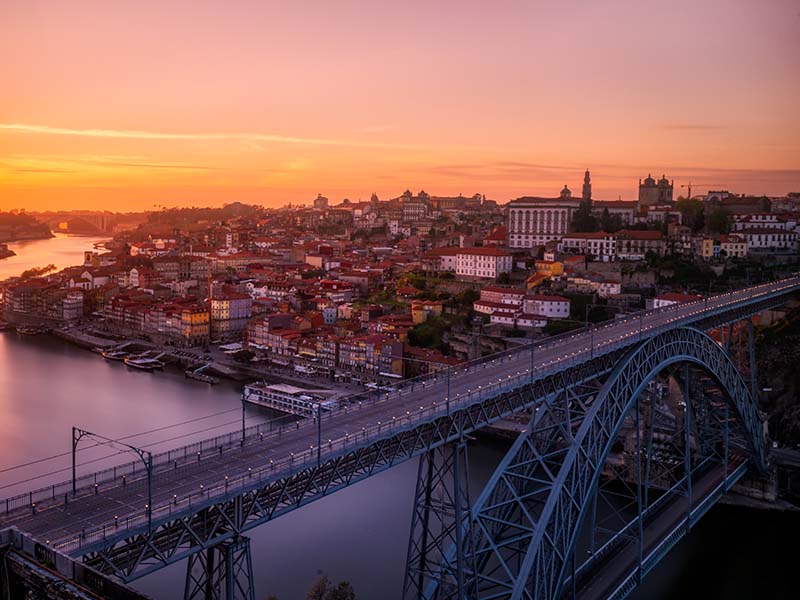
Source: Adobe Stock Author: Redaction New pedestrian and cycle bridge on the Douro The municipalities of Porto and Vila Nova de Gaia have formalised the project for a new pedestrian and cycle bridge over the River Douro, an infrastructure that will link both riverbanks between the Luiz I Bridge and the Arrábida Bridge. The project is expected to represent an investment of around 25 million euros and strengthen urban mobility in the metropolitan area. The new pedestrian and cycle bridge emerges as a strategic solution to improve circulation between the cities and ease tourist pressure on the Luiz I Bridge, one of the most visited in the region. Strategic location and mobility impact The future crossing will be built around 350 metres downstream from the Luiz I Bridge, with an approximate span of 250 metres over the Douro riverbed. This location was chosen to balance mobility flows and create a functional alternative for pedestrians and cyclists. The project also aims to improve the quality of life of residents and visitors, promoting more sustainable travel between Porto and Gaia and reducing reliance on car transport in central areas. Tender and construction timeline A design and build tender, limited by prior qualification, will be launched by the end of 2026, aiming to ensure high technical and quality standards. The process will be managed by a jury led by engineering representatives. Officials estimate that the pedestrian and cycle bridge will be completed by the end of 2029, although they acknowledge that deadlines depend on legal and administrative procedures linked to the tender and construction. Cooperation between Porto and Gaia The project results from a memorandum of understanding between both municipalities, reinforcing cooperation in joint mobility and urban development initiatives. The crossing will be jointly financed by Porto and Gaia. The authorities highlight that the new pedestrian and cycle bridge could have a significant economic and tourism impact, enhancing the Douro riverfront and creating a new architectural landmark in the region. At the same time, alternative solutions for the former Maria Pia railway bridge, decommissioned since 1991, are still under study.
Source: Adobe Stock Author: Redaction Housing supply outpaces demographic pressure The housing market in Portugal recorded a significant shift in 2025. After more than a decade in which the construction of new homes failed to keep pace with the growth in the number of households, the annual housing deficit was finally halted. This development results from a combination of increased housing supply and reduced demographic pressure, creating a new balance between demand and construction. In recent years, the housing shortage contributed to a sharp rise in house prices and rents. However, the latest data indicate that the pace of construction has started to move closer to market needs. In 2025, thousands of new homes were completed and the number of housing permits reached its highest level since 2008, strengthening prospects for growth in housing supply. At the same time, the slowdown in migration flows helped reduce pressure on the housing market, contributing to greater stability between demand and housing availability. Accumulated deficit continues to shape the market Despite this reversal in trend, the housing market remains affected by the accumulated deficit built up over the past decade. The gap between the number of homes needed and those actually built is estimated to have reached around 300,000 dwellings, a figure that continues to influence prices and affordability. The lack of available housing remains one of the main challenges for many families, particularly in major urban centres. Although the situation has improved on an annual basis, the impact of the accumulated shortage remains visible in high rents and purchase prices. Social housing is emerging as one of the tools with the greatest potential to strengthen housing supply. In Portugal, the weight of this segment remains limited compared with other European countries, reducing its ability to respond to the housing needs of lower-income households. Construction accelerates but remains below past levels Construction activity has been gradually recovering, reflected in the increase in permits and the growing number of new projects. Even so, current construction levels remain significantly below those recorded around 15 years ago, when the country was producing a much larger volume of housing. Among the main obstacles to expanding housing supply are labour shortages, the lack of available land, complex licensing procedures and rising construction costs. These factors continue to limit the sector’s ability to respond to market needs. Recent developments suggest, however, that demographic pressures on housing may gradually ease over the coming years, provided supply continues to grow sustainably and keeps pace with demand. House prices remain supported by fundamentals The rise in housing prices recorded over the last decade does not appear to be linked to excessive credit growth. Although house prices increased significantly, bank lending expanded at a much more moderate pace. This suggests that rising housing prices were driven mainly by the imbalance between supply and demand, rather than by uncontrolled credit expansion. Furthermore, the parallel evolution of house prices and rents points to a market supported by real economic fundamentals. With the annual housing deficit now halted, the main challenge is to strengthen construction and consistently increase housing supply, making it possible to gradually correct the accumulated shortage and improve access to housing in Portugal.
Source: Adobe Stock Author: Redaction Municipal inspection focuses on Boavista developments The Porto City Council is reviewing several real estate projects in the Boavista area following non-conformities detected in the Emporium Park development. The ongoing assessment involves urban planning and municipal inspection services and also covers other projects under construction or in the licensing phase. The reassessment takes place amid public opposition to several projects in the city of Porto, with particular focus on areas such as Avenida da Boavista, Foz do Douro and the surroundings of Parque da Cidade. At issue are urban interventions whose compliance with approved projects has been questioned. Emporium Park subject to partial suspension In the case of Emporium Park, the municipality identified deviations in the execution of the roof compared with the licensed project, leading to a partial suspension of the works. According to municipal information, changes were detected in relation to what had been approved in the licence. In parallel, other real estate projects in the same area are under review by municipal services. Among the cases being assessed are developments on Avenida da Boavista and the connection to Rua de Nevogilde, some of which include changes to parameters such as number of units, building volume or construction density, following complaints submitted. Legal disputes and ongoing challenges Opposition to real estate projects in the city has taken shape through various judicial and administrative actions. In the case of Emporium Park, a public-interest lawsuit was filed seeking to suspend the project, based on alleged non-compliance with urban planning regulations. Other developments in the same area are also facing opposition, although at different stages of progress. In some cases, works are suspended or under review, while in others projects continue or are awaiting decisions from the relevant municipal departments.
Source: Adobe Stock Author: Redaction Housing crisis requires new models Pressure on the property market continues to worsen access to housing in Portugal, especially in Greater Lisbon and Greater Porto. The shortage of available homes, combined with rising sale and rental prices, is making it harder to meet the needs of the middle class. In this context, the Build to Rent model emerges as an alternative to increase housing supply. This concept focuses on constructing buildings exclusively for rental purposes, allowing larger-scale projects and responding more quickly to growing demand. Build to Rent can increase supply Build to Rent is already widely used in several European markets and is now becoming more relevant in Portugal. The model makes it possible to develop housing designed from the outset for renting, creating scale and greater stability in the housing market. Despite its potential, challenges related to construction costs, urban planning rules and project profitability remain. Even so, sector specialists believe Build to Rent could play an important role in strengthening housing supply, especially in metropolitan areas. At the same time, public measures to encourage construction may have limited impact if they are not accompanied by conditions that facilitate larger-scale projects and reduce costs for property developers. Lisbon and Porto face greater pressure The Greater Lisbon and Greater Porto markets continue to stand out due to strong housing demand, supported by their ability to attract and retain working-age populations. This dynamic keeps prices high and encourages new property developments, although with increasingly compact homes. In peripheral areas, demand is more limited and households’ financial capacity constrains the development of new projects. The lack of new developments continues to increase difficulties in accessing housing, especially in the mid-market segment. In addition, the ageing population in some suburban areas may create opportunities for urban rehabilitation and strengthening housing supply without relying exclusively on new construction. Property market seeks sustainable solutions Market developments show that Portugal’s housing problem requires structural solutions and not just temporary tax measures. Build to Rent is identified as one of the models capable of creating housing supply on a larger scale and responding to growing urban demand. Investment in purpose-built rental projects could help stabilise the property market, increase housing availability and improve access to housing in Portugal’s main cities. With housing demand remaining high, the development of new property promotion models will be decisive in balancing supply and ensuring greater accessibility in the housing market.
Source: Adobe Stock Author: Redaction Development combines two properties in Porto The real estate project of the former Café Bela Cruz in Porto will include 11 units, resulting from the integration of two properties into a single development. The promoter of the Bela Cruz project explains that combining the original building with an adjacent property acquired at public auction allows for a larger-scale intervention and strengthens the housing supply in the Boavista area. The second property, with 465.6 m2, was acquired in September 2025 for 2.5 million euros. The aim of the Bela Cruz project is to create a single building, maintaining the urban identity of the location and enhancing the surrounding area near the sea. Bela Cruz project and urban regeneration The Bela Cruz project is designed by architect Manuel Ventura and foresees the preservation of the original façade and the tower of the former café. The new building will have three floors, not exceeding the existing height of 12.24 metres, respecting the urban alignment of Avenida da Boavista. The promoter of the Bela Cruz project highlights that the intervention seeks to balance refurbishment and new construction, while preserving historical elements of the space. The total construction area of the Bela Cruz project will be 3,230 m2, with completion expected in around 540 days. City council reviews planning framework The Porto municipality indicates that the Bela Cruz project was licensed in the previous term, having received a favourable opinion from CCDR-N, but it will be reassessed in terms of its urban planning framework. The Bela Cruz project foresees a partial demolition of the original building to make way for housing, with no commercial spaces, and unit types ranging from T2 to T4. The municipality stresses that the licensing was approved in January 2025 and that the process will be monitored under the current urban context. The former Café Bela Cruz, dating back to 1952, marked the Boavista skyline for decades, going through several phases of use until the current redevelopment project.
Source: Adobe Stock Author: Redaction Porto City Council moves ahead with AL cancellations The Porto City Council will close 1,413 Alojamento Local (AL) establishments, out of a total of 10,821 units registered in the city. This figure represents a growth of around 3% compared to the end of 2025, but also a strengthening of AL inspections in Porto. The cancellation process mainly arises from legal non-compliance, particularly failures to submit mandatory documentation. The municipality aims to regularise the situation of short-term rental establishments that do not comply with current rules, reinforcing control over AL in Porto. Non-compliance concentrated in the historic centre Most of the AL establishments in Porto that will be cancelled are located in the city’s historic centre. According to several sector entities, this area concentrates a significant share of Porto’s short-term rental market, making the impact of the AL cancellations particularly relevant. Among the main reasons for closure are missing legally required documentation, including mandatory items such as insurance and notifications to the competent authorities. These breaches call into question the legality of the AL activity and justify the Porto City Council’s decision to proceed with the cancellations. Regularisation and impact on the AI market in Porto The municipality also states that it has carried out several support and clarification initiatives to help AL owners regularise their situation. However, many short-term rental operators in Porto failed to submit the required data within the established deadlines. With the cancellation of these 1,413 AL units, the revoked registrations in the historic centre will not be able to resume tourist activity in that area, in line with the legal framework in force. This measure reinforces the trend towards tighter regulation of AL in Porto and may impact the dynamics of short-term rentals in the city, especially in the most tourist-heavy areas.


 Deutsch
 Português
 English
 Français
 Español
 Nederlands
 Русский
 中文(简体)