Source: Adobe Stock Author: Redaction Parliament approves new rules for undivided inheritances Parliament has approved the bill authorising the Government to amend the regime governing undivided inheritances, creating mechanisms to simplify the sale of properties when there is no agreement among all heirs. The aim is to reduce the deadlocks that prevent the completion of many inheritance proceedings and increase the availability of properties on the market. The new legislation provides for the creation of a special and urgent procedure for the sale of properties belonging to undivided inheritances, applicable to inheritances already opened and not yet divided when the law comes into force. The Government will now have 180 days to regulate the amendments to the Civil Code and the Code of Civil Procedure. Property sales will have new exceptions The new rules include several safeguards. The family home will be excluded from this special procedure unless there is the express consent of the surviving spouse or the surviving partner in a de facto union. Inheritances in insolvency proceedings will also be excluded from the new regime. Another new measure is the creation of the role of an executor with powers to divide the inheritance, allowing a third party to assume responsibility for the administration, liquidation and division of the estate, making proceedings faster and less dependent on agreement between heirs. The legislation also provides that, in certain situations, the appointment of the head of the inheritance may be decided by a simple majority of the heirs. Measures aim to unlock properties on the market The changes seek to address delays affecting thousands of undivided inheritances, where the lack of agreement between heirs prevents the sale or use of properties for many years. By simplifying these procedures, the intention is to facilitate the circulation of assets and contribute to a greater supply of homes for sale or rent. The new regime forms part of a broader set of measures aimed at improving the functioning of the housing market by reducing situations of idle property assets and speeding up inheritance proceedings that remain unresolved for long periods.
Source: Adobe Stock Author: Redaction Housing weighs more heavily on household budgets Housing costs remain one of the biggest challenges facing young people in Portugal. Among those aged between 18 and 35, four in ten have a second job to cope with rising monthly expenses, at a time when average incomes are no longer keeping pace with the cost of living. With an average monthly income of €1,489, many young people choose to combine their main job with additional work to ensure financial stability. Alongside other fixed expenses, housing is one of the costs that places the greatest strain on monthly budgets. Rent and mortgages absorb a large share of income Recent data show that 37% of young people own a home, with 23% still repaying a mortgage . Meanwhile, 26% live in rented accommodation and 30% continue to live with relatives. Among those paying either a mortgage or rent, around four in ten spend between 10% and 30% of their monthly income on housing. Almost one-third allocate between 31% and 50% of their income to this expense, reflecting the growing burden of housing costs. Young tenants face greater financial pressure Financial pressure is even more evident among those living in rented accommodation. Around 45% of young tenants spend more than 30% of their monthly income on rent, a higher percentage than that recorded among homeowners with mortgages. Among young people repaying a mortgage, 43% also devote more than 30% of their income to their monthly repayments. These figures show that housing costs continue to be one of the main sources of financial pressure on young people, influencing their career choices and the need to seek additional sources of income.
Source: Adobe Stock Author: Redaction Sintra strengthens its appeal in the property market Demand for luxury properties in Sintra grew by around 150% between 2024 and 2025, alongside an increase in the supply of homes across the region. This trend reflects the growing interest of buyers seeking alternatives to Lisbon, favouring locations that offer more space, tranquillity and easy access to the capital. Among the main factors behind this trend are the availability of villas with gardens and large plots, the preserved natural surroundings, the presence of international and private schools, and excellent accessibility. Although prices remain more competitive than in some neighbouring municipalities within the Lisbon Metropolitan Area, Sintra has experienced significant property value growth in recent years. Prices continue to rise as international interest grows According to the National Statistics Institute (INE), the median price of homes sold in Sintra reached approximately €2,733 per square metre in the fourth quarter of 2025. Prices in the luxury segment remain above this benchmark, reflecting the continued appreciation of this market. Alongside domestic demand, interest from international buyers is also increasing, particularly from the United Kingdom, Iran, South Korea and Mozambique. This demand has helped boost the high-end residential market and strengthen Sintras position as one of the most sought-after destinations for property investment. Quality of life boosts demand in Sintra The combination of historical heritage, nature, privacy and proximity to Lisbon continues to make Sintra an attractive choice for those seeking a high quality of life. Market trends show that the municipality is consolidating its position as a leading destination to live and invest, meeting the expectations of buyers looking for space, comfort and a strategic location.
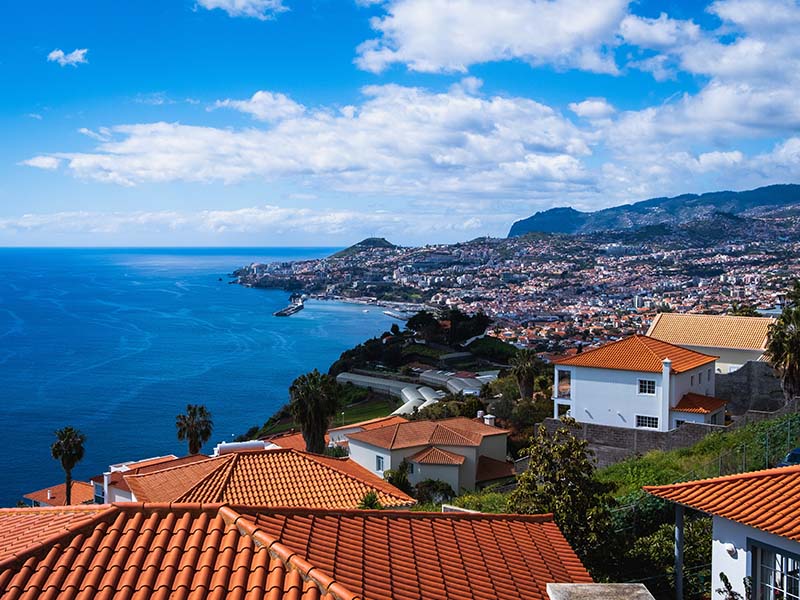
Source: Adobe Stock Author: Redaction Sines leads the rise in rents in Portugal House rents continue to increase across much of the country, making access to housing increasingly difficult. Data released by the National Statistics Institute (INE) show that only 18 of Portugals 308 municipalities recorded a fall in rents over the past year, while areas such as Sines, the Algarve and Madeira continue to experience significant increases. The most striking case is Sines, where rents have risen by 152% since 2020. Renting a 100-square-metre home now costs around €1,465, making the municipality one of the most expensive in the country, behind only Lisbon, Cascais and Oeiras. This pressure is driven by the regions strong industrial, technological and tourism sectors. The Algarve and Madeira remain among the most expensive regions The Algarve continues to be one of the countrys most expensive regions for renting a home. In 2026, more than half of the Algarves municipalities no longer allow a 100-square-metre property to be rented on the national minimum wage. In addition to Faro, Loulé, Albufeira, Lagos, Portimão, Lagoa and Vila Real de Santo António stand out. In the Autonomous Region of Madeira, Funchal and Santa Cruz also remain above the national average, reflecting the impact of tourism demand and the limited housing supply. Only 18 municipalities recorded falling rents Despite the overall upward trend, there are some exceptions. According to the INE, only 18 municipalities recorded a reduction in house rents over the past 12 months. These include Lagos, Castro Marim, São Brás de Alportel, Odemira, Alcácer do Sal, Moura, Serpa, Arganil, Santa Comba Dão, Vila Flor, Vila Nova de Foz Côa, Calheta and Horta. Even so, these decreases are isolated cases and do not alter the national trend of rising rental prices. Market remains under pressure, but growth slows in major cities Although the median value of house rents increased by 8.8% between March 2025 and March 2026, the pace of growth slowed in 17 of Portugals 24 municipalities with more than 100,000 inhabitants. Lisbon and Porto remain among the countrys most expensive rental markets, but rent pressure was lower than the average recorded over the past decade. By contrast, municipalities such as Guimarães, Gondomar, Vila Nova de Famalicão, Almada, Leiria, Coimbra and Oeiras recorded an acceleration in prices. The data show that the rental market continues to be marked by significant regional differences. While some areas are showing signs of stabilisation, regions such as the Alentejo coast, the Algarve and Madeira continue to record some of the largest increases in house rents, reflecting the growing difficulty many families face in accessing housing.
Source: Adobe Stock Author: Redaction Why is it important to understand supply and demand? In the real estate market, negotiating does not depend only on argumentative skills. Increasingly, decisions are based on data that allow us to understand the balance between supply and demand, anticipate trends and assess whether a property price is aligned with market reality. For buyers, sellers and professionals in the sector, this information can make the difference between a good deal and a missed opportunity. The logic is simple: when there are few properties available for a high number of interested buyers, the bargaining power tends to be on the seller’s side. Conversely, when supply exceeds demand, buyers gain room to negotiate price, conditions or deadlines. Why is data more important than perception? Market data allows more informed decisions because it helps to: Understand the balance between supply and demand. Analyse price trends and average time on the market. Assess existing competition in a given area. Set more realistic prices and negotiation strategies. Reduce decisions based only on perceptions or expectations. How can sellers negotiate more confidently? For a seller, knowing these indicators means avoiding one of the most common mistakes: listing a property at an unrealistic value. A price above market reality can reduce the number of enquiries and extend the time on the market, later forcing successive price reductions. Conversely, a correctly positioned property generates more interest and increases the likelihood of receiving consistent offers. How can buyers make use of available information? From the buyer’s side, data helps to understand whether there is room to negotiate or whether it is necessary to act quickly in order not to miss an opportunity. In markets where demand clearly exceeds supply, waiting too long may mean finding higher prices or fewer available options. It is also important to remember that the real estate market is essentially local. While a city may show signs of stabilisation, certain neighbourhoods or segments may continue to experience strong demand. Therefore, relying only on national indicators is not always sufficient. The analysis must be carried out at the scale of the market in which the property is located. The role of market analysis in decision-making It is precisely in this context that market analysis tools become relevant. The Comparative Market Analysis (CMA) from Infocasa allows users to cross-reference information on comparable properties and support a more grounded assessment of a property’s positioning. It does not replace professional expertise, but provides an objective basis to support decisions and negotiations. It is no coincidence that it remains one of the most widely used tools by professionals in the sector to support valuations and monitor market evolution. If you are looking to improve your decision-making in the property market, speak to us, we help you identify concrete opportunities for analysis and optimisation tailored to your specific case. In a context where buyers and sellers have access to more and more information, negotiating based on perceptions has become insufficient. The use of supply and demand statistics allows for a better framing of a property’s value, a better understanding of market dynamics and a reduction of uncertainty throughout the negotiation process.
Source: Adobe Stock Author: Redaction What you should analyse before investing in luxury housing Investing in luxury housing can be a strategy to diversify wealth and seek long-term appreciation. This segment stands out for the exclusivity of properties, prime location and greater resilience to market fluctuations, and can also generate income through premium rental or future sale. Before moving forward, you should assess several factors. Location remains decisive, prioritising areas with high demand, good access, safety and appreciation potential. It is also important to define a realistic budget, setting aside an additional 20% to 30% for works, maintenance, improvements and unforeseen expenses. Another essential aspect is the analysis of legal and tax obligations. Some prestigious properties are subject to urban or heritage restrictions that may limit future interventions and influence the investment’s profitability. Which properties offer the greatest appreciation potential? Not all luxury housing offers the same return potential. The most sought-after properties include historic houses, penthouses in urban centres, properties located in tourist destinations and homes equipped with advanced technology, swimming pools, spas or smart home systems. Appreciation can be enhanced through renovation works, high-quality finishes, efficient energy certification and distinctive services. In addition, properties located in areas covered by urban regeneration projects tend to benefit from growing demand over time. Those seeking profitability may also consider purchase, refurbishment and resale operations. When well planned, these strategies can deliver attractive margins, especially if properties are acquired below market potential and works are completed within short timeframes. Mistakes you should avoid when investing in luxury housing When investing in luxury housing, it is essential to avoid decisions based solely on emotion. A technical and financial analysis reduces risks and allows more sound decisions. Among the most common mistakes are underestimating maintenance costs, ignoring taxes associated with the purchase, choosing locations without appreciation potential or failing to consider legal limitations of the property. It is also common to set an unrealistic resale price or underestimate the rental potential as a source of income. Relying on specialists in legal, tax, technical and real estate fields can help you correctly assess each opportunity and maximise the return on your investment.
Source: Adobe Stock Author: Redaction House prices record strong growth House prices in Portugal have seen significant appreciation in recent years. Between 2017 and 2025, the median sale price more than doubled in 157 municipalities, reflecting the strong momentum of the national housing market. According to a study published by the Bank of Portugal (BdP), the largest increases were mainly concentrated in the Lisbon Metropolitan Area, the Porto Metropolitan Area and the Setúbal Peninsula. Municipalities such as Sintra, Seixal, Barreiro, Moita and Setúbal recorded increases of more than 200% in the median price per square metre of homes sold. This trend demonstrates growing demand for areas considered more affordable, leading many buyers to seek alternatives outside the most highly valued urban centres. Rents also increased in several municipalities The rental market followed the same growth trend. Between 2017 and 2024, the median rent per square metre more than doubled in 23 municipalities. Among the municipalities with the highest increases were Grândola, Sines and Moita, where rents rose by more than 125%. The study indicates that housing demand shifted towards areas where the relationship between purchase prices and rents was more favourable, particularly in the metropolitan areas of Lisbon and Porto. By contrast, the Algarve recorded more moderate increases. The region already had high property values, strongly influenced by international demand and non-resident buyers. Expectations remain positive for housing The BdP also reveals that Portuguese consumers continue to expect house price growth above the euro area average. Between January and March 2026, the average forecast pointed to a 7% increase in housing prices in Portugal, while the expectation for the euro area stood at 3.7%. Expectations also vary according to consumers age. Younger people, aged between 18 and 34, anticipate more moderate increases, while older consumers expect more significant appreciation. Regionally, the highest forecasts are concentrated in the North and the Lisbon Metropolitan Area. Mortgage lending boosts the market Despite the strong appreciation in property values, the Bank of Portugal highlights that less than 60% of housing transactions relied on bank financing in recent years, with the remaining share funded through buyers own capital. Even so, since the beginning of 2024 there has been stronger growth in mortgage lending, driven by lower interest rates and support measures for young buyers, including the State public guarantee scheme. The study concludes that the Portuguese housing market continues to show strong momentum, although it identifies limitations in the available information for analysing in greater detail supply, demand and the costs associated with housing construction.
Source: Adobe Stock Author: Redaction Inventory of the State’s real estate assets The process of surveying the State’s real estate assets has already made it possible to identify 94% of public properties yet to be registered, according to the Ministry of Finance. In concrete terms, around 56,500 properties have been inventoried out of an estimated total of 60,000. This work on the inventory of the State’s real estate assets is being carried out by ESTAMO, a public entity responsible for managing public-sector real estate assets. The aim is to ensure a complete and up-to-date register of existing assets. Identification process nearing completion According to the Ministry of Finance, the process of inventorying the State’s real estate assets is at a very advanced stage and is expected to be completed by the end of the year. This is a global survey being carried out for the first time in a structured way by a government. Most of the identified properties correspond to rural assets, representing around 67% of the total. The work includes several stages, from data collection to geographical identification and the definition of geometric boundaries, essential for consolidating the register of the State’s real estate assets. Expansion of the inventory to other public entities In the next phase, the process of inventorying the State’s real estate assets will be extended to properties belonging to other public entities under state supervision. The aim is to ensure that all public-sector real estate assets are properly identified and registered. It is also planned that, in 2027, protocols will be signed with central, regional and local administration entities in order to consolidate and validate all the collected information. This will improve the management of the State’s real estate assets and increase transparency. Digital register and future asset management Rural properties will also be registered on the “Single Property Counter – BUPI” platform, integrating the national cadastral information system. This step contributes to a more efficient management of the State’s real estate assets. ESTAMO, integrated into Parpública, will continue to manage, sell and lease non-strategic real estate assets, including public buildings such as hospitals, prisons and ministries. This process represents a significant step forward in the organisation and future management of the State’s real estate assets.
Source: Adobe Stock Author: Redaction Commercial properties record a historic rise Commercial property prices in Portugal increased by 10.1% in 2025, marking the largest rise since the start of the Commercial Property Price Index (IPPCom) series. The value of commercial properties accelerated by 5.4 percentage points compared with 2024, reflecting strong momentum in the national property market. Despite the significant increase in commercial properties, growth remained below that recorded in the residential segment. The housing market continued to show stronger appreciation, maintaining the trend seen in recent years. The Commercial Property Price Index measures the evolution of prices of commercial properties transacted across the country, using tax data linked to IMT and IMI. Residential market grows above commercial properties While commercial properties grew 10.1%, the Housing Price Index increased by 17.6% in 2025. The gap between the two segments widened to 7.5 percentage points, highlighting stronger pressure in the residential market. According to the published data, both commercial properties and the housing sector saw an acceleration in price growth. However, the stronger increase in housing widened the difference between the two indicators compared with the previous year. The residential market continues to be driven by strong demand from households, rising mortgage credit, and limited supply across several regions of the country. Households also increased their share of property purchases. In 2025, other institutional sectors accounted for just 12.5% of housing acquisitions, the lowest level since 2019. At the same time, households increased housing purchases by 10.5%, reaching more than 148,000 transactions last year. Institutional investors slightly reduced acquisitions compared with 2024. In financial terms, housing sales to households exceeded €35 billion, with growth significantly higher than purchases by other sectors. This confirms the growing weight of households in the Portuguese property market. What explains the rise in commercial properties The increase in commercial properties is driven by several factors, including rising construction costs, asset revaluation, and the recovery of economic activity across various business sectors. In addition, the commercial property market continues to benefit from demand for logistics spaces, offices, and assets linked to retail and services. Limited supply in certain locations is also putting upward pressure on prices. With the property market maintaining a growth trajectory, commercial properties continue to establish themselves as a key segment for investors and businesses in Portugal.
Source: Adobe Stock Author: Redaction IRN speeds up land registry certificate issuance IRN has launched a new digital service that allows the immediate issuance of online land registry certificates. The new platform simplifies access to the land registry certificate, an essential document for buying, selling or financing a property. With this system, the request can be completed entirely online, eliminating manual steps and reducing waiting times. The automatic issuance covers urban, rural and mixed properties. Users can search for properties using the land registry description number or tax article number, completing the process within minutes after payment validation. According to IRN, the automation aims to make registration services faster, more efficient and more accessible, improving the experience for citizens and reducing bureaucracy in access to land registry certificates. Land registry certificate is essential when buying a home The land registry certificate gathers updated legal information about a property, including identification of the owner, mortgages, seizures or other associated charges. The document is mandatory in operations such as buying and selling homes, mortgage housing credit contracts and other acts related to properties. IRN’s new service allows multiple properties to be added in the same request and payments to be made by ATM reference or credit card. After confirmation, the access code to the land registry certificate becomes available almost immediately in the user’s reserved area. The online request can be made through authentication with the Citizen Card, Digital Mobile Key or professional certificates for lawyers, notaries and solicitors. This functionality automatically fills in the applicant’s identification data, further speeding up the process. Reserved area simplifies request management IRN’s new digital platform includes a reserved area where users can track requests, check certificate statuses and access consultation codes during the document’s validity period, which is six months. Through the access code, it is possible to consult updated information about the property, including active registrations and pending requests. The system also allows land registry certificates to be renewed during the final month of validity, avoiding the need for entirely new requests. With this service, IRN strengthens the digitalisation of registrations and simplifies access to essential documents in the property market and housing-related processes. Digitalisation reduces bureaucracy in registrations IRN’s investment in service digitalisation aims to reduce response times and make procedures simpler for citizens and professionals in the property sector. The immediate issuance of the land registry certificate represents another step in the modernisation of public services linked to properties. With the new digital portal, IRN aims to facilitate operations related to housing, financing and property transfers, allowing faster and more efficient access to land registry information in Portugal.
Source: Adobe Stock Author: Redaction Porto City Council changes strategy for mosques Porto City Council has decided to move forward with the public auction of two municipal properties that had been acquired by the previous administration for future projects linked to mosques. The decision was announced by the mayor, Pedro Duarte, who stated that the construction of mosques is not among the municipality’s current priorities. The two vacant properties had been intended for associations from Porto’s Muslim community through the granting of surface rights for several decades at symbolic rents. Properties intended for mosques to be sold One of the properties is located on Rua do Pinheiro Grande, in Campanhã, and had been planned for the Islamic Cultural Centre of Porto. The second is located on Rua da Porta do Sol, in the Historic Centre, and had been intended for the Bangladesh Community Association of Porto. According to the municipality, placing these properties up for public auction does not prevent the interested associations from bidding to purchase the land. The aim is to ensure equal access for any entity interested in the spaces. Porto City Council is currently assessing the properties to determine the base value for the sale. Executive considers other priorities for the city Pedro Duarte argues that municipal land should be directed towards areas considered more urgent, such as affordable housing and public communal spaces. The mayor states that the construction of mosques is not a priority for the current municipal executive. This position marks a change from the strategy followed by the previous leadership of Rui Moreira, which had prepared proposals to support the two mosque projects through long-term contracts and reduced rents. Mosque projects sparked political debate The proposals related to the mosques were expected to be voted on in early June 2025, but were ultimately removed from the agenda. At the time, Rui Moreira justified the decision with the proximity of the end of the mandate and the lack of political consensus on the issue. The associations involved argued that the mosque projects would strengthen social support and the integration of the immigrant community. Among the highlighted initiatives were food support actions, assistance for vulnerable families, Portuguese language teaching and social integration programmes. The planned agreements represented municipal support worth hundreds of thousands of euros distributed over 40 years, due to the difference between the market value of the surface rights and the symbolic rents planned for the future mosques.
Source: Adobe Stock Author: Redaction The way we present a property can determine whether it sells quickly or stays on the market for months. Descriptions play a crucial role in this process, but creating attractive and accurate texts for different audiences is not always an easy task. Fortunately, Artificial Intelligence (AI) and advanced solutions like eGO Real Estate have simplified this mission, making it possible to sell globally with just a few clicks. AI and the Revolution in Property Descriptions Traditionally, writing engaging descriptions required market experience and persuasive communication skills. Today, AI allows much of this work to be automated, analysing property features, target audience preferences, and market trends to generate texts that truly highlight the strengths of each property. With intelligent algorithms, it is possible to: Create personalised descriptions that capture the attention of different client profiles; Highlight the most valued attributes in the market, such as location, finishes, or leisure areas; Avoid grammatical errors and inconsistencies, ensuring professional texts; Optimise descriptions for search engines (SEO), increasing the visibility of online listings. Additionally, Artificial Intelligence also helps simplify administrative tasks, such as contract management and sending reminders, allowing the property consultant to dedicate more time to humanised and strategic client service. Automatic Translation: How to Sell to the World One of the most powerful features of eGO Real Estate is the automatic translation of property descriptions. With this tool, it is possible to publish listings in multiple languages, such as English, French, and Spanish, without spending time on manual translations while maintaining information consistency. This means that a property in Lisbon or Porto can be immediately presented to international clients, significantly expanding the reach of your portfolio. With automatic translation integrated into the eGO CRM , you no longer need to worry about translation errors or inconsistencies between languages. Simply create the description in Portuguese, and the AI system takes care of adapting it to the selected languages. How to Make the Most of Artificial Intelligence To create even more effective descriptions, follow these tips: 1. Be specific: The more information you provide about the property, the better the description generated by AI will be. 2. Contextualise the target audience: Inform the AI about the buyer profile, such as young professionals, families, or international investors. 3. Choose the communication style: You can opt for a sophisticated, friendly, relaxed, or even humorous tone, depending on the property and audience. 4. Use clear prompts: A well-structured command increases the quality of the result. For example: “Create an engaging description for a T4 in Leiria with a pool, garden, and premium finishes. Highlight comfort, quiet location, and exclusive lifestyle.” 5. Explore different formats: AI can write texts in paragraphs, lists, bullet points, or even comparisons, adapting to your marketing needs. Direct Benefits for Agents and Consultants By integrating AI and automatic translation into the sales process, eGO Real Estate provides tangible advantages: Speed: Rapid publication of properties in multiple languages; Consistency: Ensures all descriptions follow the same quality standard; Global reach: Attracts international clients; Time savings: Eliminates manual translation and revision work; Sales strategy: Consultants can focus on negotiations and personalised service. Selling properties today is not just about showing beautiful photos; it is about communicating strategically, clearly, and engagingly. Artificial Intelligence, combined with the automatic translation of eGO Real Estate , transforms how property agents reach international clients, simplifying processes and increasing campaign effectiveness.


 Deutsch
 Português
 English
 Français
 Español
 Nederlands
 Русский
 中文(简体)