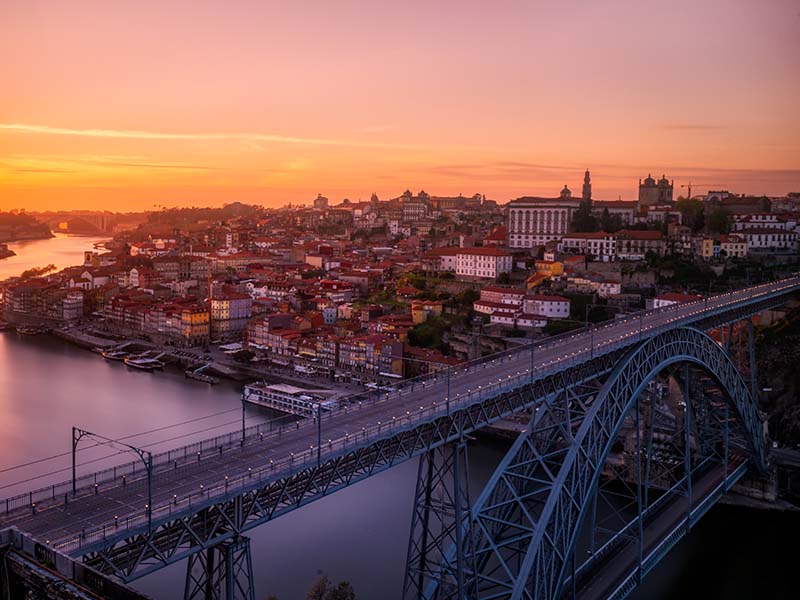
Photo: Adobe Stock Author: Redaction Review paves the way for a new rate Porto City Council will proceed with a review of the tourist tax regulations, starting a process that could result in an increase in the amount paid by visitors. The tourist tax is currently three euros per night, after rising from two to three euros in 2024. The proposal to be put to a vote by the council does not yet set a new amount. At this stage, it provides for a 10-working-day period during which interested parties can participate and submit contributions on the regulatory changes. The possibility of increasing the tourist tax to four euros has already been raised by the council, bringing the amount charged in Porto closer to that applied in Lisbon. Tourism grows and generates more revenue The review comes amid a period of growth in tourism activity in the city. Between 2019 and 2025, the number of overnight stays increased by 45.6%, exceeding 6.6 million last year. Over the same period, the number of guests grew by 37.2%, surpassing three million. The average length of stay also increased, from around 2.04 nights in 2019 to 2.16 nights in 2025. In the first six months of 2026, overnight stays rose by 4.48%, while the number of guests increased by 3.53% compared with the same period of the previous year. The growth in tourism was also reflected in municipal revenue. In 2025, the tourist tax generated €32.3 million, 54.5% more than in the previous year. Porto seeks to balance tourism and the city The council considers that the increase in visitor numbers also means greater use of public services and infrastructure, including urban cleaning, mobility, security, culture and heritage. In this context, the tourist tax is seen as a source of revenue to cover part of the costs associated with tourism activity. The review is also linked to the municipal strategy to fund free public transport for residents. At the same time, the council aims to maintain Porto as a tourist destination without compromising the quality of life of those who live in the city. The goal is to strike a balance between tourism activity and residents’ needs. Following approval to begin the procedure, a period will be opened for interested parties to participate. Only at a later stage is a specific proposal for the new tourist tax amount expected to be presented.
Source: Adobe Stock Author: Redaction Buying a home is out of reach for many Access to housing remains one of the main challenges for Europeans on average incomes. In Portugal, the difficulty is particularly evident in metropolitan areas, where property prices have risen faster than incomes. A study by the Vienna University of Technology, published in the journal Maps, analysed more than 18 million property sale listings and 3.5 million rental listings across 31 European countries. The analysis concluded that only 44% of the population lives in cities where an average income allows them to buy an apartment or studio of around 50 square metres. In Portugal, this situation places the country among the markets considered systematically unaffordable for buyers on average salaries. Lisbon faces high housing pressure Large metropolitan areas account for a significant share of housing pressure. Lisbon is among the European capitals where a considerable proportion of the population struggles to find a moderately sized home without committing a large share of their income. The situation is made worse by the gap between property prices and households’ financial capacity. Even when long-term mortgage credit is available, the budget households have at their disposal continues to limit the size of the home they can afford. This reality particularly affects first-time buyers and those who need to move to another city for professional or personal reasons. Renting also faces difficulties The pressure is not limited to buying a home. The rental market also shows high levels of unaffordability in several European regions, including Portugal. In coastal and tourist areas, additional demand for temporary accommodation and second homes contributes to reducing the supply available to residents. This phenomenon is particularly relevant in areas where tourism plays a significant role in the local economy. When the supply of permanent housing decreases, rents tend to face additional upward pressure, making it more difficult for households to access suitable housing. More supply is essential to improve access The housing affordability crisis has a major impact on metropolitan areas, but its effects are also felt in surrounding regions. Rising prices in urban centres can lead to increased demand in peripheral areas, putting pressure on these markets as well. Improving access to housing will require increasing supply and adapting policies to the characteristics of each region. Measures targeting renting, construction, renovation and the use of the existing housing stock can help rebalance the market. In Portugal, the challenge is to create conditions for housing to become more aligned with households’ financial capacity, both for those looking to buy and those looking to rent.
Source: Adobe Stock Author: Redaction More visitors and overnight stays in summer Data released by the National Statistics Institute (INE) show that tourism maintained a positive trend in July. Tourist accommodation establishments welcomed 3.4 million guests, 1% more than in the same month of the previous year. The number of overnight stays also increased, reaching 9.6 million, representing a 2.1% year-on-year rise. This growth was driven both by domestic demand and the arrival of international visitors. Residents accounted for 3.1 million overnight stays, up 5.1% compared with July last year. Overnight stays by non-residents increased by 0.7%, reaching 6.6 million. This growth also had an impact on sector revenues. Total revenue from tourist accommodation reached €923.7 million during the month. UK remains the leading source market The UK market remained the main source of overnight stays by foreign tourists in Portugal, followed by Spain. Among the main source markets, Poland recorded the strongest growth. France, on the other hand, saw the largest decline. The US market also recorded a 3.1% drop in overnight stays in July, its second decline since the pandemic period. The trend was not the same across the country. Alentejo recorded the strongest growth, with overnight stays up 7.7%, followed by the North, which increased by 6.3%. The Algarve, Greater Lisbon and the North accounted for 68.4% of all overnight stays recorded in the country, confirming the importance of these regions to tourism activity. Lisbon leads, but Porto gains ground Lisbon remained the municipality with the highest number of overnight stays, accounting for 15.9% of the national total. Albufeira ranked second, while Porto came third. Although it did not lead in terms of volume, Porto stood out for its growth rate. The municipality recorded 690,600 overnight stays, 5.5% more than in the same period of the previous year, the highest increase among the ten municipalities with the most demand. The average length of stay also increased. After three consecutive months of decline, the average stay rose by 1.1% to 2.83 nights. Madeira and the Algarve continued to record the longest stays, averaging 4.74 and 4.31 nights respectively. Overall, the figures show a growing tourism sector, although trends vary depending on the source markets and regions.
Source: Adobe Stock Author: Redaction The regional Alentejo 2030 programme has opened applications for a €5.3 million fund, financed by the ERDF, with the aim of restoring historic heritage and promoting cultural tourism across the region. Who can benefit and which projects are eligible? The call covers interventions in museums and listed buildings, giving priority to assets of municipal interest. Applications are open to municipalities and private non-profit organisations working in partnership with the respective local authorities within the framework of the Integrated Territorial Development Strategies. Selected projects may receive EU co-financing of up to 85%. How will the funding be distributed across the region? The financial allocation will be distributed among the five Intermunicipal Communities (CIM) of Alentejo, with Central Alentejo receiving the largest share of the investment, followed by Alto Alentejo, Alentejo Litoral, Baixo Alentejo and Lezíria do Tejo. Application deadlines The application process is divided into phases: 1st Phase: Closes at the end of this month. Overall Deadline: Applications remain open until 30 June 2027.
Source: Adobe Stock Author: Redaction Tourism maintains a significant role in the economy Tourism continued to play a decisive role in the Portuguese economy in 2025. According to the preliminary data from the Tourism Satellite Account released by Statistics Portugal (INE), the sector generated a total direct and indirect contribution of €36.2 billion, representing 11.8% of the countrys Gross Domestic Product (GDP). The direct Gross Value Added (GVA) reached €21.473 billion, growing by 5.6% compared to the previous year and maintaining a share of 8.1% of national GVA for the third consecutive year. Meanwhile, Tourism Consumption in the Economic Territory totalled €49.350 billion, reflecting a nominal increase of 4.9%. Growth stabilises after the recovery Although tourism continues to deliver positive results, the indicators point to a period of stabilisation following the strong growth recorded in the years after the pandemic. In 2025, tourism consumption accounted for 16.1% of GDP, slightly below the levels recorded in 2023 and 2024. Considering both direct and indirect effects, the sector was responsible for 11.4% of national GVA, equivalent to around €30.4 billion. Tourism activity also contributed 0.3 percentage points to Portugals real GDP growth, in a year when the national economy expanded by 1.9%. Employment and wages continue to grow Final data for 2023 show that employment in tourism-related activities increased by 10.6%, clearly exceeding the growth recorded across the Portuguese economy. Measured in full-time equivalents, the sector represented 10.4% of national employment. The largest increases were recorded in hotels and similar establishments, other transport activities, and transport equipment rental. Wages also rose by 21.6%, accounting for 9.1% of total remuneration across the economy. Despite a 9.8% increase in average earnings per worker, pay levels remain below the national average. Portugal remains among Europes leading tourism economies INE data also show that Portugal continues to rank among the European countries where tourism has the greatest economic impact. In 2024, Portugal recorded the second-highest share of tourism consumption in GDP among the countries with available data, at 16.2%, behind only Iceland. In terms of the direct GVA generated by tourism, Portugal also stood out, ranking second only to Croatia among comparable countries, reinforcing the sectors strategic importance to the national economy.
Source: Adobe Stock Author: Redaction Beaches and Nature Make Comporta a Unique Destination Comporta and Melides are two of the most sought-after destinations on the Alentejo coast, known for their long beaches, unspoilt nature and peaceful atmosphere. Located around an hour and a half from Lisbon, these villages offer a combination of dunes, rice fields, pine forests and the sea, making them ideal for anyone looking to unwind away from the crowds. Comporta Beach stands out for its vast stretch of sand, excellent water quality and location within the Sado Estuary Nature Reserve. Nearby, Carvalhal Beach combines dunes, rice fields and a relaxed atmosphere, while Pego Beach is recognised for its environmental quality. Tróia-Galé Beach is an excellent choice for families thanks to its calmer waters. Another iconic landmark is the Carrasqueira Stilt Pier. Built on wooden stilts, it is still used by fishermen and remains one of the regions most photographed locations, particularly at sunset. Shops, Culture and Experiences to Discover Beyond its beaches, the region offers a wide range of experiences linked to culture, design and local traditions. Those who enjoy antiques will find shops offering furniture, decorative pieces and historical objects. Another recommended visit is the Rice Museum, housed in a former factory, where visitors can learn about the importance of rice production in the development of Comporta and the Alentejo region. Horse riding is also one of the areas most popular activities. The routes cross rice fields, pine forests and dunes before reaching the beaches, offering a different way to explore the natural landscape. Where to Eat and Enjoy Local Gastronomy Gastronomy is another of Comporta and Melides greatest attractions. The regions restaurants combine traditional Alentejo cuisine with contemporary creations, highlighting fresh fish, seafood, rice and local produce. Both villages are also home to cafés, terraces and charming venues where visitors can enjoy the relaxed atmosphere that defines this stretch of coastline. With its unspoilt beaches, excellent food, designer shops and natural scenery, Comporta and Melides are ideal destinations for a short break or a peaceful holiday at any time of year.
Source: Adobe Stock Author: Redaction Museums and culture for every taste London is one of the most visited cities in Europe and boasts a unique historical, artistic and cultural heritage. Anyone planning a trip to the British capital will find dozens of attractions for all interests, many of them with free admission. The British Museum is one of the citys must-visit attractions, with a vast collection of antiquities, including Egyptian mummies and the Rosetta Stone. The Natural History Museum is equally impressive, with exhibitions dedicated to dinosaurs, geology and biodiversity. In South Kensington, you can visit three of the citys best-known museums: the Natural History Museum, the Science Museum and the Victoria and Albert Museum. Art lovers can admire works by some of historys greatest artists at Tate Modern and the National Gallery, while White Cube showcases contemporary art exhibitions in a space with free entry. Markets, gastronomy and unique views A trip to London isnt complete without a visit to Camden Market, famous for its international food stalls, alternative shops and multicultural atmosphere. Another gastronomic landmark is Borough Market, where youll find fresh produce, local specialities and flavours from around the world. To admire the city, the London Eye remains one of its most iconic attractions, offering panoramic views across London. Alternatively, The Garden at 120 features a free rooftop terrace with 360-degree views over the capital. Parks, history and unique experiences London is home to several green spaces that are perfect for relaxing. Queen Elizabeth Olympic Park, built for the 2012 Olympic Games, combines leisure areas, art and sport. Victoria Park is ideal for walks, picnics and outdoor activities, while Epping Forest offers trails, lakes and beautiful natural scenery just minutes from the city centre. To discover the citys history, its well worth visiting the London Mithraeum Bloomberg SPACE, where an ancient Roman temple has been transformed into an immersive experience. Somerset House, meanwhile, hosts cultural activities and workshops for all ages. Street art and places not to miss Londons creativity also comes alive on its streets. The Leake Street Tunnel, near Waterloo Station, is one of the citys best-known street art locations and is constantly being refreshed with new artworks. Brick Lane and Shoreditch are also essential stops for anyone interested in murals and urban art. With such a diverse range of attractions, London remains one of Europes most complete destinations. From historic landmarks and free museums to markets, parks and cultural experiences, there is always something new to discover, whether its your first visit or a return trip to the British capital.
Source: Adobe Stock Author: Redaction Where is Lagoa da Esturranha? Lagoa da Esturranha is located in the Serra dArga, in the municipality of Viana do Castelo, and is one of the most surprising natural spots in northern Portugal. Fed by the clear waters of the Âncora River, it stands out for its turquoise-blue colour, rock formations and lush vegetation, creating a landscape that many compare to international destinations. This natural setting offers areas of varying depths, allowing both refreshing swims and relaxing moments by the water. Its well-preserved surroundings make the lagoon an excellent alternative for anyone looking to escape the busiest beaches during the summer. How to get there and what to expect To visit Lagoa da Esturranha, the easiest option is to drive to Serra dArga. After parking nearby, you will need to walk a short trail to reach the lagoon. As part of the route is uneven, it is advisable to wear comfortable footwear and bring water, especially on hot days. On site, you will find ideal swimming areas, rocks where you can relax, small shaded spots and a peaceful atmosphere surrounded by nature. As there are no facilities such as cafés, toilets or lifeguards, you should bring everything you need and take all your rubbish with you when you leave. Best time to visit Lagoa da Esturranha can be visited throughout the year, although the summer months are the most popular for swimming and outdoor activities. During spring and early autumn, the area offers a quieter atmosphere, ideal for hiking, photography and picnics. Before your visit, it is recommended to bring sunscreen, a hat, a towel, light snacks and a change of clothes if you plan to stay for several hours. Respecting the natural environment and preserving this place is essential to ensure it remains one of Viana do Castelos hidden treasures.
Source: Adobe Stock Author: Redaction Hotel investment hits record in the first half Hotel investment in Portugal reached €512 million during the first half of 2026, representing an 82% increase compared with the same period last year. This is the highest investment volume ever recorded in the first six months of the year, confirming the sectors strong momentum. Across the Iberian Peninsula, Portugal and Spain recorded billions of euros in hotel sector transactions, with an increase in the number of assets traded and hotel rooms involved in the deals. This performance reinforces the regions growing importance in the European hotel investment market. Luxury hotels and international investors lead Five-star and luxury hotels accounted for a significant share of hotel investment, particularly in Portugal, where this segment represented the majority of invested capital. Demand for high-end properties continues to drive investor interest. Unlike Spain, where domestic investment predominated, the Portuguese market was mainly driven by international buyers. Among the leading investors were groups from France and the United Kingdom, which directed a significant share of their capital towards Portugal. Institutional investors also played a key role, accounting for around half of all hotel investment across the Iberian Peninsula. Outlook remains positive for Portugal Forecasts for the coming months point to continued demand for tourism assets in Portugal. The country remains one of Europes most attractive markets for hotel investment, benefiting from international demand and the tourism sectors consistent performance. Alongside institutional investors, hotel chains and private investors continue to play an important role in the market. The growth recorded during the first half of the year strengthens confidence in the sector and consolidates Portugal as one of Europes leading destinations for new hotel investments.
Source: Adobe Stock Author: Redaction Monte Clérigo receives European recognition Monte Clérigo Beach, located in the municipality of Aljezur, was named the best beach in Europe for 2026 by European Best Destinations. The award recognises factors such as natural beauty, accessibility, environmental quality and the overall visitor experience. Located within the Southwest Alentejo and Vicentine Coast Natural Park, the beach stands out for its vast sandy shore, cliffs and unspoilt landscape. Awarded the Blue Flag, Quercus Gold Quality and Zero Pollution labels, it offers ideal conditions for those looking for a peaceful destination surrounded by nature. Nature, surfing and unique landscapes Monte Clérigo offers a varied experience, combining swimming, hiking trails and marine wildlife observation. At low tide, the rocky platform reveals natural pools and species such as starfish, sea anemones, sea urchins and small fish. The beach also offers excellent conditions for surfing, with specialised schools for beginners and experienced surfers. The panoramic views over the coastline and the natural surroundings make it one of the most iconic locations on the Vicentine Coast. Destination attracts those seeking tranquillity European Best Destinations highlighted Monte Clérigo for its authenticity, preserved environment and small-scale tourism, far from the Algarves busiest resort areas. The assessment also considered ease of access and the value for money of accommodation. The award reinforces the growing appeal of the Vicentine Coast, a region increasingly sought after by travellers looking for nature, less crowded beaches and a more relaxing holiday experience. In addition to its scenery, visitors will find restaurants, accommodation and outdoor activities that complement a visit to one of Europes highest-rated destinations.
Source: Adobe Stock Author: Redaction Alhambra: Granada’s most iconic monument Visiting Granada means discovering the Alhambra, one of Spain’s most important monuments and a UNESCO World Heritage Site. Built over several centuries, this complex brings together palaces, fortresses, gardens and courtyards that showcase the influence of Islamic architecture in the region. The Nasrid Palaces stand out for their rich decorative details, while the Generalife invites visitors to stroll through its gardens and fountains. The Alcazaba offers some of the best views over the city, and the Palace of Charles V highlights the transition to Renaissance architecture. As demand is very high, it is advisable to book tickets well in advance, especially for the Nasrid Palaces. Albaicín and Sacromonte reveal the soul of the city The Albaicín district preserves Granada’s historic identity, with narrow streets, whitewashed houses and viewpoints overlooking the Alhambra and the Sierra Nevada. The Mirador de San Nicolás is one of the most popular places to admire the sunset, while the Mirador de San Miguel Alto offers a quieter perspective of the city. In the upper part of the district stands the Dar al-Horra Palace, one of the finest examples of Nasrid architecture outside the Alhambra. Along Carrera del Darro, El Bañuelo stands out as one of the oldest and best-preserved Arab baths in Spain. Just a few minutes away is Sacromonte, renowned for its traditional cave houses and strong connection to flamenco. The district has preserved its unique identity and offers visitors the chance to experience one of the most authentic sides of Granada’s culture. The historic centre combines heritage, shopping and gastronomy Granada’s city centre is home to many of its most important monuments and commercial areas. Plaza Nueva is the ideal starting point for exploring the historic streets, lined with restaurants, cafés and tapas bars. Nearby, you will find Granada Cathedral, one of the finest examples of Spanish Renaissance architecture. The Alcaicería Market keeps alive the tradition of the former silk market, with shops selling handicrafts, ceramics and typical Andalusian products. Gran Vía de Colón and Calle Elvira complete the visit to the city centre, where you can discover historic buildings, traditional shops and Arab-inspired tea houses. Tips for visiting Granada Granada’s location makes it an excellent base for exploring Andalusia, allowing you to combine your visit with destinations such as Seville, Córdoba, Ronda, Málaga or the Sierra Nevada. To make the most of your trip, it is recommended to book Alhambra tickets in advance, explore the historic neighbourhoods on foot and take time to enjoy the local gastronomy. Combining heritage, culture, nature and tradition, Granada has established itself as one of the most complete destinations for anyone wishing to discover southern Spain.
Source: Adobe Stock Author: Redaction A historic centre full of heritage Salvador, the capital of the state of Bahia, is a city where the past and the present coexist in perfect harmony. Founded in 1549, it was Brazils first capital and preserves one of the most important collections of colonial architecture in Latin America. Pelourinho, a UNESCO World Heritage Site, is home to churches, squares and historic buildings that tell centuries of history. Walking through its cobbled streets is a chance to discover a rich heritage shaped by colonial architecture, music and the warm hospitality of Salvadors residents. Salvadors Afro-Brazilian heritage shapes its identity Afro-Brazilian culture is present throughout Salvador and is an essential part of the citys identity. African influence can be seen in religion, music, art and local traditions. The sound of the atabaque drums, Afro-Brazilian carnival groups, monuments honouring historical resistance figures and places such as the National Museum of Afro-Brazilian Culture help visitors understand the importance of this legacy. Religious syncretism is also one of Salvadors defining features, where Catholic churches and Candomblé traditions coexist and reflect Bahias cultural diversity. Gastronomy, culture and new places to explore Alongside its historical heritage, Salvador offers a rich gastronomy influenced by African, Indigenous and Portuguese traditions. Specialities such as acarajé, moqueca and vatapá are must-try dishes for anyone visiting the city. Other highlights include the Lacerda Elevator, the Mercado Modelo and new cultural spaces housed in restored historic buildings, which contribute to the revitalisation of the historic centre and enrich the visitor experience in Bahias capital. Beaches, nature and vibrant neighbourhoods Salvador also captivates visitors with its beaches and its location on the Bay of All Saints. Barra Lighthouse, Porto da Barra Beach, Itapuã and Stella Maris are among the most popular spots for enjoying the tropical climate. The Rio Vermelho neighbourhood, closely associated with writer Jorge Amado, stands out for its lively nightlife, restaurants and the House of Iemanjá, one of the citys most iconic landmarks. Blending culture, nature and tradition, Salvador offers a complete experience for anyone wishing to discover one of Brazils most fascinating destinations.


 Deutsch
 Português
 English
 Français
 Español
 Nederlands
 Русский
 中文(简体)