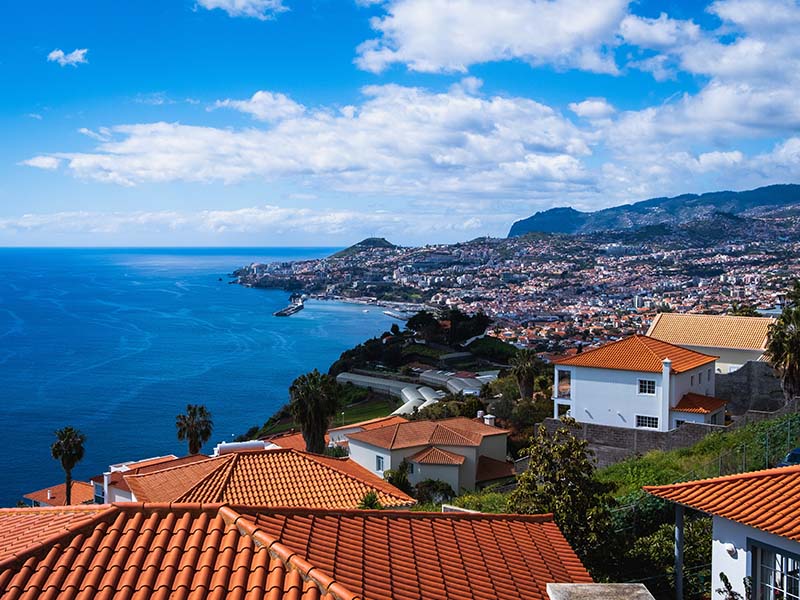
Portugal recorded the world’s largest increase in house prices at the start of 2026, while real prices declined globally.
Source: Adobe Stock
Author: Redaction
Portugal stands out in the global market
Portugal started 2026 against the international trend. According to an analysis by the Bank for International Settlements (BIS), real house prices in the country increased by 15.2% over one year, the highest growth among the 57 economies analysed.
Although the increase remains significant, the pace of growth is slowing. Even so, house prices continue to follow a trajectory that differs considerably from that observed in most international markets.
Portugal’s performance also contrasts with that of the euro area. Over the same period, real house prices in the region increased by 2.6%, while countries such as Spain and Italy recorded increases of 9.9% and 3.8%, respectively.
Limited supply keeps pressure on prices
Strong demand and a shortage of properties help explain the evolution of house prices in Portugal. The imbalance between buyers and available supply remains particularly evident in the lower-priced segments.
At the start of 2026, rising interest rates and inflation affected household purchasing power, contributing to a decline in transactions. This situation is likely to have helped moderate house price growth, although it did not reverse the upward trend.
Measures aimed at stimulating construction and housing are underway to increase supply. These include reducing VAT on construction to 6% and changes to licensing procedures. However, the impact of these measures is expected to take time to reach the market.
Prices fall in several economies
The international trend is quite different from that recorded in Portugal. The BIS points to a 1.2% decline in real house prices in the first quarter of 2026, following a 0.5% decrease at the end of 2025. In advanced economies, real prices fell by 0.2% year-on-year. Canada, the United States and the United Kingdom recorded declines of 7%, 2% and 2%, respectively. In emerging economies, the decrease was 2%, mainly due to the performance of Asian markets. However, house price developments were not uniform. Real house prices increased in 39 of the economies analysed, while four remained virtually unchanged and 14 recorded a decline.
Global housing remains above pre-crisis levels
Despite the recent decline, real house prices remain significantly above the levels recorded before the global financial crisis of 2007-2009. Worldwide, the cumulative increase stands at around 20%.
Differences between countries are considerable, however. Turkey recorded a 117% increase compared with post-crisis levels, followed by India at 62% and the United States at 56%.
At the other end of the scale, Italy and China continue to have real house prices below the levels observed after the crisis, with differences of 24% and 15%, respectively.
The BIS data therefore show that residential market developments are far from uniform. While several economies are facing a correction in house prices, Portugal continues to experience strong pressure on property values, amid high demand and insufficient supply.


 English
 Português
 Français
 Español
 Deutsch
 Nederlands
 Русский
 中文(简体)