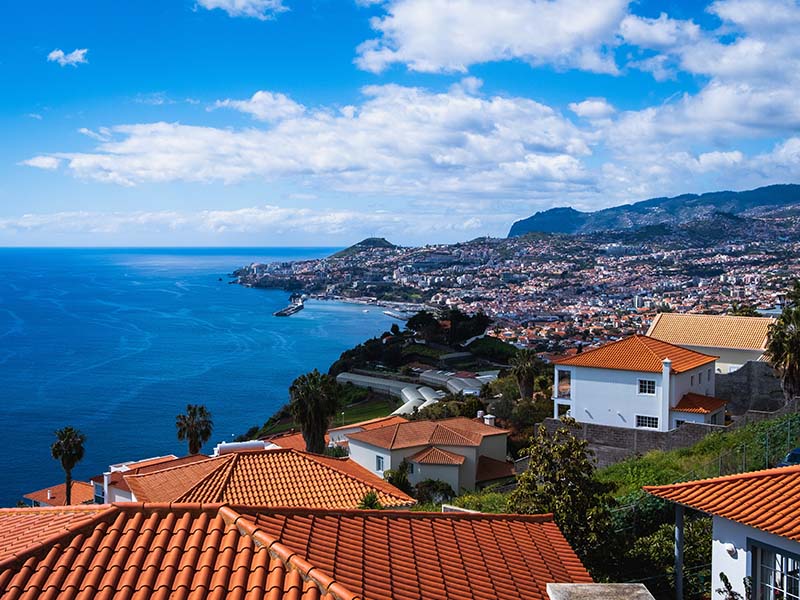
Source: Adobe Stock Author: Redaction DBRS and market outlook The DBRS (Dominion Bond Rating Service) anticipates a gradual slowdown in housing prices in Portugal in the coming years, if reduced immigration, high inflation and tighter credit conditions persist. However, market dynamics suggest that housing prices in Portugal will remain under pressure due to supply shortages. Supply and demand in real estate The agency highlights that housing prices in Portugal are mainly driven by the imbalance between supply and demand. Insufficient construction and high costs limit the market’s response. Thus, housing prices in Portugal tend to remain high, even with some slowdown in demand. In Portugal, the housing shortage worsens the evolution of housing prices in Portugal. The DBRS rules out a housing bubble scenario, stressing that growth has not been supported by excessive household debt. The debt-to-disposable income ratio has fallen significantly since the last financial crisis, strengthening sector stability and reducing systemic risk in the housing market. Structural factors and outlook Limited available land, labour shortages in construction and slow licensing procedures continue to constrain the real estate market. Tourism and international demand also influence the supply-demand balance, prolonging tensions in the sector and making a rapid price correction more difficult.
Source: Adobe Stock Author: Redaction Having a real estate website is not enough. What makes the difference today is not the number of visits, but the ability to attract people with real buying or selling intent and turn them into qualified contacts. 1. Mobile experience and usability Most real estate searches happen on mobile. If the website is slow or difficult to use, the user leaves within seconds. An effective website must ensure: Simple and intuitive navigation; Fast page loading; Efficient property search and filters; Always visible contact details; Short and easy-to-fill forms. User experience directly influences bounce rate and lead generation. 2. SEO to be found on Google The most common mistake is working SEO only with generic keywords. Today Google values search intent: “buy house in Porto” (direct intent) “price per m2 Matosinhos” (research) “how to sell a house fast” (seller intent) Best practices: Create location-based pages with clear intent; Optimise titles and descriptions with real context; Structure content by topics, not just properties; Ensure a simple and logical architecture. If you are evaluating how to improve your real estate website performance, contact us, we help identify concrete optimisation opportunities for your specific case. 3. Local SEO + GEO (Generative Engine Optimization) Local SEO remains essential, but it has evolved. It is no longer enough to appear on Google; it is necessary to be understood by AI-based answer engines. To achieve this: Create structured content by areas and parishes; Answer real questions (“what is it like to live in…”); Include local context (services, access, schools); Develop pages explaining the market by area. This approach increases the likelihood of content being used as a source in AI-generated answers (GEO – Generative Engine Optimization), which already influences how users discover real estate information. 4. Content that builds authority (not just traffic) A blog should not exist just to “publish articles”, but to capture leads over time. Content that really works: Buying and selling guides; Taxes and costs explanations; Content for property owners (how to sell better); Real market analysis by area; Frequently asked questions. The goal is simple: be the first answer before the client contacts an agent. 5. Converting visitors into leads Traffic alone is not enough; the goal is conversion. The website must make contact easy through: Viewing requests; Property valuation requests; Direct contact (phone/WhatsApp); Simple and fast forms; Well-placed calls to action. Sites Premium by eGO Real Estate were developed with a specific focus on lead generation, including optimised forms and navigation flows designed to increase conversion of visitors into qualified contacts. 6. Credibility and trust The decision to contact depends heavily on perceived trust. Key elements: Client testimonials; Success cases; Clear information about the agency and team; Consistent local presence; Professional and up-to-date image. These factors reduce doubts and increase contact intention. 7. Constant website updates An outdated website harms both user experience and SEO. It is essential to: Remove sold or reserved properties; Update prices and descriptions; Ensure forms work correctly; Review old content; Fix technical or navigation issues. When properly structured, a website stops being just a showcase and becomes a commercial asset. Solutions such as Sites Premium by eGO Real Estate help structure this process in an integrated way, focused not only on visibility but on concrete results for real estate agencies.
Source: Adobe Stock Author: Redaction Tax Authority clarifies the application of 6% VAT on construction The reduction of VAT on residential construction from 23% to 6% comes into force on 1 July 2026, but the rules continue to raise questions. As the date approaches, the Portuguese Tax and Customs Authority (AT) published a document explaining how the new reduced rate should be applied and clarifying the tax framework under the current legislation. However, while the Tax Authority was presenting its interpretation of the law, the Government submitted a proposal to Parliament to amend the legislation even before the measure takes effect, which could change some of the rules initially approved. Government wants to simplify the regime One of the main proposed changes concerns the way VAT is settled in construction operations. Under the current model, the builder issues invoices without VAT to the property developer, who is then responsible for self-assessing and paying the tax, provided they meet the conditions required to benefit from the reduced rate. However, the legislation currently limits this mechanism to purchasers of construction services who are entitled to full or partial VAT deduction. The Governments proposal seeks to remove this restriction, extending the regime to all purchasers of construction services. Conditions to benefit from the reduced rate Access to the 6% VAT rate remains subject to compliance with several legal requirements. These include the obligation for the properties to be intended as permanent homes, as well as maximum limits on the sale price or rental value. Currently, the reduced rate only applies to homes with a sale price of up to €660,000 or monthly rents of up to €2,300, provided the remaining legal conditions are met. Changes may arrive in the coming months Although the new rate comes into force at the beginning of July, the legal framework may undergo further changes following Parliaments discussion of the Governments proposal. The aim is to simplify the application of the 6% VAT rate on construction and reduce uncertainty for developers, builders and other operators in the sector. Until any amendments are approved, the current rules remain in force, together with the clarifications issued by the Tax Authority.
Source: Adobe Stock Author: Redaction Municipalities warn of risk in PRR projects Several local authorities in Portugal are currently carrying out projects funded by the Recovery and Resilience Plan (PRR) that may not be completed by the deadline of 31 August. These include schools, health centres, public housing and citizen service offices. Against this backdrop, municipalities are asking the Government for support to ensure the continuity of PRR works. The National Association of Portuguese Municipalities (ANMP) held a meeting of its Governing Council and sent a new letter to the Prime Minister requesting an urgent solution to prevent project stoppages and possible repayment of European funding. ANMP calls for solutions to avoid stoppages The ANMP advocates the creation of an alternative financing mechanism to ensure the completion of ongoing PRR works. The aim is to prevent municipalities from having to bear additional costs alone or repay funds already received. According to the association, the risk of interruption of PRR works could create difficulties in relations with contractors and jeopardise project delivery. The priority is to ensure financial predictability and stability in the execution of PRR-funded works. Government pushes for execution by August The Government has been calling for an acceleration in the execution of PRR works, encouraging beneficiaries to complete as many projects as possible by the end of August. However, the ANMP warns that not all works will be completed within the expected deadline. Municipalities stress that PRR works are essential for areas such as education, health and housing, which are key to local communities. They also argue that state financial support is crucial to avoid additional burdens on municipalities and to ensure the continuity of public investment.
Source: Adobe Stock Author: Redaction Urban expansion and new growth strategy The revision of Évora’s Urbanisation Plan sets out a new cycle of urban growth, with the forecast of more than 7,000 new homes and a strengthening of the city’s housing capacity. The aim is to respond to the growing demand for housing in Évora and balance development between residential areas, the economy and green spaces. According to the Mayor of Évora, the strategy involves increasing the supply of housing across different types, while also promoting new areas for investment. The Évora urbanisation plan aims to strengthen the territory’s attractiveness and create conditions to welcome new residents and businesses in the coming years. Housing, economy and health cluster The new Évora urbanisation plan not only foresees the construction of thousands of homes, but also the expansion of economic and industrial zones. Around 90 hectares are planned for economic activities, including the expansion of business parks and the creation of new logistics areas. One of the main new features of the Évora urbanisation plan is the creation of a 42-hectare health cluster near the future hospital. This hub will integrate healthcare services and university education, strengthening the link between the academic sector and the regional health system. Mobility, planning and public participation The Évora urbanisation plan also includes urban mobility proposals, with emphasis on the forecast of a metrobus-type public transport system, although its implementation depends on future financial conditions. The document results from a participatory revision process, incorporating political and public contributions. The Évora urbanisation plan proposal is not yet final and will be subject to opinions from regional entities before a new phase of public discussion. The aim is to complete the revision process in the coming months, with a final vote in the municipal council and official publication after validation, thus defining Évora’s urban development strategy for the next decade.
Source: Adobe Stock Author: Redaction House prices continue strong growth House prices in Portugal continued to record significant growth in the first quarter of 2026. According to data released by the National Statistics Institute (INE), the House Price Index increased by 17.8% compared with the same period in 2025. Although this remains a high growth rate, it represents a slowdown of 1.1 percentage points compared to the previous quarter. This was the first slowdown in house prices since the second quarter of 2024, signalling a slight moderation in the national property market after several quarters of strong appreciation. Existing homes lead price increases The rise in house prices was more pronounced in the existing homes segment. Between January and March 2026, second-hand properties recorded a year-on-year increase of 19.7%, clearly surpassing the 12.6% growth observed in new homes. Compared with the previous quarter, house prices rose by 3.8%. Existing homes once again stood out, with an increase of 4.2%, while new homes advanced by 2.7%. These figures show that demand continues to put pressure on the second-hand housing market, contributing to rising house prices. Number of transactions falls in the first quarter Despite rising house prices, the number of transactions declined. In the first quarter of 2026, 37,745 homes were sold, representing a year-on-year decrease of 8.7%. Compared with the final three months of 2025, the reduction was even more significant, reaching 12.4%. The decline in transactions suggests a less dynamic market in terms of volume, although prices continue to rise. Value of transactions increases despite lower sales Even with fewer transactions, the total value generated by the housing market increased. The overall value of transactions reached €9.9 billion in the first quarter of 2026, up 3.2% compared with the same period a year earlier. Households continued to dominate demand, accounting for the purchase of 32,828 homes, equivalent to 87% of all transactions. This segment represented an investment of €8.6 billion. On the other hand, buyers with tax residence outside Portugal reduced their presence in the market. Purchases made by foreign residents fell by 15.6% year-on-year, totalling 1,770 homes. Nevertheless, rising house prices continue to support growth in the overall value of transactions in the Portuguese property market.
Source: Adobe Stock Author: Redaction Development Bank of Portugal and new public guarantees The Development Bank of Portugal (BPF) is studying the creation of public guarantees to facilitate access to housing, especially for the middle class and for families with greater financial difficulties. The measure could strengthen the bank’s role in housing finance in Portugal. According to the institution’s president, Gonçalo Regalado, the bank may not only intervene on the supply side of housing but also support credit through public guarantee mechanisms. The objective is to increase access to housing finance across different segments of the population. Focus on supply and support for the middle class Despite this possible expansion, the BPF maintains its priority on the supply side, with 95% of its activity focused on supporting housing construction and development. However, it still admits the possibility of intervention in housing credit when necessary. The bank has been reinforcing financing for affordable housing projects, including cooperatives and public-private partnerships. Among the instruments already in place are support lines and guarantees that facilitate access for commercial banks to finance these projects. Investment and housing strategy The Development Bank of Portugal has billions of euros available for housing-related programmes, including financing for cooperatives and affordable housing projects. These amounts are part of a broader strategy extending to 2028. In addition to housing, the institution also plans new credit lines for sectors such as agriculture and tourism, where it identifies greater financing difficulties. In the health sector, the bank may also participate in financing major hospital projects in partnership with European institutions. The Development Bank of Portugal also states that it remains independent from political power, ensuring that its decisions follow its own technical and financial criteria.
Source: Adobe Stock Author: Redaction Change in property demand in Portugal Property demand in Portugal has been recording a significant geographical shift. Major urban centres such as Lisbon and Porto are showing stabilisation or even a decline in direct demand, mainly due to high housing prices. In contrast, property demand is steadily moving towards suburban and inland municipalities, where prices are more affordable and the housing supply is more diverse. This trend reflects a reorganisation of the housing market in Portugal. Municipalities with the highest growth in property demand In coastal areas and metropolitan suburbs, some municipalities stand out for strong growth in property demand. Lagos records a 416% increase in searches, followed by Tavira with 302%, Grândola with 282%, Caldas da Rainha with 250% and Mafra with 246%. Vila Nova de Gaia emerges as one of the main hubs, with high volumes of property demand and strong appreciation, approaching the dynamism of Porto. In the inland areas of the country, property demand is also growing significantly. Vila Nova de Foz Côa shows a year-on-year increase of 135%, while Alfândega da Fé, Sernancelhe and Murça also record positive developments. Central and Northern regions gain relevance in property demand In the Central and Northern regions, municipalities such as Góis, Penedono, Vouzela and Pinhel show increases between 30% and 34% in property demand. These areas also stand out for having average housing prices below €100,000. This dynamic reinforces the attractiveness of these regions, where property demand combines lower prices with a higher quality of life and more living space. Average values and new trends in property demand Despite the growth in property demand in these new “hotspots”, average prices per square metre remain more competitive compared to major district capitals. This difference has reinforced interest in suburban and inland areas, contributing to a redistribution of property demand across the country.
Source: Adobe Stock Author: Redaction Demolition of Cinema Paris moves ahead in Lisbon Lisbon City Council has approved the demolition of the former Cinema Paris, located in the parish of Estrela, to make way for a new housing project with 19 units. The building has been vacant for more than 40 years and is in an advanced state of deterioration, according to technical reports. The Cinema Paris, inaugurated in 1931 on Rua Domingos Sequeira, closed in 1985 and has remained abandoned ever since. The decision now taken is part of an urban redevelopment process aimed at replacing the former facility with a new residential building. Project foresees 19 housing units in Lisbon The new project for the former Cinema Paris includes the construction of a building with 19 housing units and one commercial unit. The urban operation covers a plot of around 952.94 m², with a construction area of over 5,700 m² spread across several floors above and below ground level. The new structure will include parking, with around 37 spaces planned in the basement, as well as storage rooms. The project also includes a courtyard of more than 400 m², part of which will be permeable green space. According to the proposal, no affordable housing or public housing is planned within the project, with urban compensation payments required from the developer. This stems from the framework of the process initiated in 2017 and its level of consolidation. Urban redevelopment and heritage impact The decision to proceed with the demolition of the former Cinema Paris is part of a broader urban transformation context in Lisbon, where vacant buildings are replaced by new housing developments. The property, already in an advanced state of deterioration, had technical opinions supporting its declassification as a cultural facility. Nevertheless, the intervention sparked debate around heritage preservation and the city’s urban memory. The new construction will be subject to several technical opinions and urban planning requirements, including architectural integration guidelines and archaeological monitoring. The project represents another urban regeneration intervention in the capital, with a direct impact on local housing supply.
Source: Adobe Stock Author: Redaction Competitor analysis is not a theoretical exercise. It is a strategic tool that allows you to identify real opportunities to generate more leads, increase qualified contacts and close more deals. Why should you analyse the competition? In the property sector, clients compare everything: properties, agencies, marketing, reputation and even response time. If you do not know how your competition operates, you are losing leads without even realising why. Analysing the market allows you to: identify lead generation opportunities; improve your property marketing strategy; understand what is working in the market; avoid mistakes already being made by others; increase your conversion rate. What should you analyse in your competitors? Competition is not only who sells properties in your area. It is any agent or business competing for your client’s attention. You should analyse: How they generate leads (portals, social media, ads, Google) Quality of property listings Pricing strategy and positioning Average response time to clients Digital presence (web and social media) Online reputation and reviews Types of content they publish How they present properties The more complete your analysis, the clearer your competitive advantage will be. How to turn analysis into more leads? 1. Identify what generates real results Do not just analyse what your competition does: identify what truly generates interaction, contacts and viewing requests. 2. Detect market gaps Many agencies lose leads due to: poorly detailed or unappealing listings lack of follow-up slow response to enquiries weak digital presence These gaps are direct opportunities for your agency to generate more leads. 3. Optimise your digital presence If your competitors are already strong on property portals, your differentiation may lie in: Google (local SEO) social media with educational content property videos active lead generation strategies 4. Improve your value proposition Analyse what other agencies offer and ask: - What do I do better? - Why should a client choose my agency? How to carry out effective competitor analysis? 1. Set clear objectives Do not analyse everything at once. Focus on lead generation, visibility or conversion. 2. Identify real competition Include: local agencies independent agents property portals property investment companies 3. Continuously monitor the market Competition changes quickly. What works today may not work tomorrow. Tools such as property market analysis platforms, such as Infocasa , help track prices, trends and competitor behaviour in a faster and more structured way. The property agents who grow the most are those who turn information into action: they adjust strategies, improve communication and optimise lead generation based on what the market is actually doing.
Source: Adobe Stock Author: Redaction Reference event in the real estate sector in the North of the country expects to reinforce the growth recorded in recent editions The Imobinvest – Real Estate Fair returns to the Alfândega do Porto from 17 to 19 September 2026 for its 7th edition, consolidating itself as one of the main meeting points between professionals, companies, investors and the public interested in the real estate market. After an edition that brought together more than 40 exhibitors and welcomed more than 5,500 visitors, the event is preparing to once again highlight the main trends, investment opportunities, real estate projects and solutions that are transforming the sector. Over three days, real estate developers, estate agents, consultants, financial institutions, construction companies, architecture, technology and specialised service companies will have the opportunity to present their solutions, establish new contacts and generate business opportunities in a privileged environment for networking and knowledge sharing. The 2026 edition will also feature the presence of important sector partners, including eGO Real Estate , CASASAPO , SUPERCASA , Infocasa , among others. “The Imobinvest continues to establish itself as a strategic platform to bring professionals and consumers closer together, promote business and follow the evolution of the real estate market. The growth recorded in recent editions demonstrates the growing relevance of this meeting for the entire sector ecosystem,” the organisation states. In addition to the exhibition area, the programme will include conferences, presentations, networking moments and initiatives dedicated to innovation, investment and the development of the real estate market. The event will take place at the Alfândega do Porto at the following times: 17 September (Thursday): 14h00 to 19h00 18 September (Friday): 10h00 to 19h00 19 September (Saturday): 10h00 to 19h00 Registrations and additional information will be available at www.imobinvest.pt .
Source: Adobe Stock Author: Redaction Housing supply outpaces demographic pressure The housing market in Portugal recorded a significant shift in 2025. After more than a decade in which the construction of new homes failed to keep pace with the growth in the number of households, the annual housing deficit was finally halted. This development results from a combination of increased housing supply and reduced demographic pressure, creating a new balance between demand and construction. In recent years, the housing shortage contributed to a sharp rise in house prices and rents. However, the latest data indicate that the pace of construction has started to move closer to market needs. In 2025, thousands of new homes were completed and the number of housing permits reached its highest level since 2008, strengthening prospects for growth in housing supply. At the same time, the slowdown in migration flows helped reduce pressure on the housing market, contributing to greater stability between demand and housing availability. Accumulated deficit continues to shape the market Despite this reversal in trend, the housing market remains affected by the accumulated deficit built up over the past decade. The gap between the number of homes needed and those actually built is estimated to have reached around 300,000 dwellings, a figure that continues to influence prices and affordability. The lack of available housing remains one of the main challenges for many families, particularly in major urban centres. Although the situation has improved on an annual basis, the impact of the accumulated shortage remains visible in high rents and purchase prices. Social housing is emerging as one of the tools with the greatest potential to strengthen housing supply. In Portugal, the weight of this segment remains limited compared with other European countries, reducing its ability to respond to the housing needs of lower-income households. Construction accelerates but remains below past levels Construction activity has been gradually recovering, reflected in the increase in permits and the growing number of new projects. Even so, current construction levels remain significantly below those recorded around 15 years ago, when the country was producing a much larger volume of housing. Among the main obstacles to expanding housing supply are labour shortages, the lack of available land, complex licensing procedures and rising construction costs. These factors continue to limit the sector’s ability to respond to market needs. Recent developments suggest, however, that demographic pressures on housing may gradually ease over the coming years, provided supply continues to grow sustainably and keeps pace with demand. House prices remain supported by fundamentals The rise in housing prices recorded over the last decade does not appear to be linked to excessive credit growth. Although house prices increased significantly, bank lending expanded at a much more moderate pace. This suggests that rising housing prices were driven mainly by the imbalance between supply and demand, rather than by uncontrolled credit expansion. Furthermore, the parallel evolution of house prices and rents points to a market supported by real economic fundamentals. With the annual housing deficit now halted, the main challenge is to strengthen construction and consistently increase housing supply, making it possible to gradually correct the accumulated shortage and improve access to housing in Portugal.


 Nederlands
 Português
 English
 Français
 Español
 Deutsch
 Русский
 中文(简体)